- This topic is empty.
-
AuthorPosts
-
2026-05-18 at 4:46 pm #88213
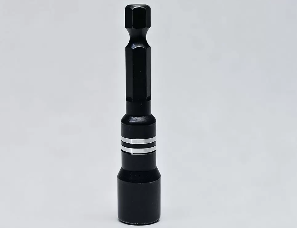
Selecting an impact nut setter is often treated as a straightforward purchasing decision. However, in industrial environments where fastening performance directly affects product quality and operational efficiency, the selection process requires careful technical evaluation.
An improperly selected impact nut setter can lead to torque inconsistency, fastener damage, excessive tool wear, and increased downtime. In contrast, a well-matched tool ensures stable performance, longer lifespan, and improved overall efficiency.
This article examines how to evaluate and select the right impact nut setter based on real application requirements.
Matching tool design to fastening requirements
The first step in selecting an impact nut setter is understanding the specific fastening application.
Key variables include:
-
Fastener size and type (hex, flange, special shapes)
-
Required torque range (typically from 20 Nm to over 300 Nm depending on application)
-
Operating speed of the impact driver
-
Frequency of use (intermittent vs continuous operation)
For example, high-torque structural applications require reinforced sockets with thicker walls, while precision assembly may prioritize dimensional accuracy and reduced vibration.
Shank design and compatibility
Impact nut setters are typically designed with different shank types to match tool interfaces.
Common configurations include:
-
1/4-inch hex shank for quick-change systems
-
3/8-inch or 1/2-inch square drive for heavy-duty applications
-
Magnetic or non-magnetic tip options
Quick-change systems improve efficiency in high-volume environments by reducing tool switching time. Shangfeng Machinery offers precision-engineered shank systems designed for secure locking and minimal runout.
Magnetic vs non-magnetic configurations
Magnetic nut setters provide convenience in holding fasteners during positioning, especially in vertical or overhead applications.
However, in high-speed industrial environments:
-
Excessive magnetism can attract metal debris
-
Debris accumulation can affect precision and wear rate
Non-magnetic designs are often preferred in clean manufacturing environments or automated systems where precision and consistency are prioritized.
Length and reach considerations
Impact nut setters are available in various lengths, typically ranging from 50 mm to over 150 mm.
Short-length tools offer:
-
Higher torque transfer efficiency
-
Reduced vibration
-
Better control in confined spaces
Longer tools provide:
-
Extended reach in deep or recessed fastening points
-
Improved accessibility in complex assemblies
Selecting the appropriate length ensures optimal balance between accessibility and performance.
Durability engineering for high-cycle applications
In high-frequency production lines, durability becomes a primary concern.
A high-quality impact nut setter should withstand:
-
Tens of thousands of impact cycles without deformation
-
Repeated torque pulses without losing dimensional accuracy
-
Continuous operation without excessive heat buildup
Cold-forged tools, such as those produced by Shangfeng Machinery, demonstrate superior durability due to improved internal grain structure and reduced material defects.
Standards compliance and global compatibility
For international operations, compliance with standards such as DIN and ANSI ensures compatibility with global fastener systems.
This is particularly important for:
-
Export-oriented manufacturing
-
Multi-region production lines
-
Standardized assembly processes
Tools manufactured to these standards provide consistent performance across different markets and applications.
Application-specific optimization
Different industries require different tool characteristics.
In automotive manufacturing:
-
High precision and durability are critical
-
Tools must withstand continuous high-speed operation
In construction:
-
High torque capacity and robustness are essential
-
Tools must perform in harsh environmental conditions
In electronics assembly:
-
Precision and minimal vibration are prioritized
-
Smaller fasteners require tighter tolerances
Matching tool specifications to application requirements ensures optimal performance and cost efficiency.
Conclusion: engineering-driven selection for long-term performance
Choosing the right impact nut setter is not a simple procurement task. It requires a detailed understanding of application requirements, tool design parameters, and long-term performance considerations.
By focusing on material quality, precision manufacturing, and application matching, manufacturers can significantly improve fastening efficiency and reduce operational risks.
With advanced manufacturing capabilities, standardized production processes, and global market experience, Shangfeng Machinery provides impact nut setter solutions that meet the demands of modern industrial environments.
In high-performance fastening systems, the right tool is not just a component—it is a key factor in achieving consistent, reliable, and efficient production outcomes.
https://www.sftoolspro.com/
Jiangsu Shangfeng Machinery Co.; Ltd. -
-
AuthorPosts

- You must be logged in to reply to this topic.