- This topic is empty.
-
AuthorPosts
-
2026-07-09 at 6:02 pm #88678
The evolution of aerial cinematography and industrial drone operations has introduced a critical engineering challenge that often goes unnoticed until image quality deteriorates: resonance between propulsion systems and sensitive payloads. For operators of CineLifter-class platforms carrying professional gimbals and high-resolution cameras, understanding and mitigating power system resonance has become essential to achieving professional-grade results.
Understanding Resonance in Drone Power Systems
Resonance occurs when the natural vibration frequency of one component—typically the propeller assembly—coincides with the natural frequency of another system element, such as the gimbal stabilization mechanism or airframe structure. In heavy-lift cinematography drones operating in the 3-10kg payload range, this phenomenon manifests as micro-vibrations that compromise image stability, reduce operational efficiency, and accelerate component fatigue.
The root causes of resonance in CineLifter power systems stem from three interconnected factors. First, propeller blade deflection under load creates oscillating forces that transmit through motor mounts into the airframe. Second, aerodynamic turbulence from blade passage generates pulsating pressure waves at predictable frequencies. Third, mechanical imperfections in the propeller-motor interface introduce high-frequency vibrations that excite structural modes throughout the platform.
Heavy-load operations amplify these issues dramatically. When large-diameter propellers generate the substantial thrust required for cinematography payloads, blade bending increases non-linearly with applied torque. This aeroelastic deformation alters the blade’s dynamic characteristics, shifting vibration frequencies into ranges that commonly overlap with gimbal control systems operating between 5-15 Hz.
The Material Science Foundation
Addressing resonance begins with propeller material selection and modification. Traditional plastic propellers lack the structural rigidity to maintain aerodynamic precision under heavy loads, while pure carbon fiber solutions, though stiff, can transmit vibrations too efficiently. The optimal approach involves modified composite materials that balance stiffness with controlled damping characteristics.
Glass fiber reinforced nylon represents a breakthrough material system for heavy-lift applications. By adjusting the glass fiber content and modifying the nylon matrix properties, engineers can tune the material’s elastic modulus to achieve specific bending mode frequencies. This material modification allows propeller designers to intentionally shift blade vibration characteristics away from critical resonance zones.
For extreme heavy-load scenarios exceeding 7kg, carbon nylon composites provide the necessary elastic modulus to prevent aerodynamic twist distribution failure. The carbon fiber reinforcement maintains the blade’s designed angle of attack distribution even during high-thrust maneuvers, ensuring consistent performance throughout the operational envelope.
Structural Design Strategies for Resonance Control
Beyond material selection, propeller structural geometry plays a decisive role in resonance mitigation. Thickening key blade cross-sections, particularly at mid-span locations, raises bending mode frequencies above the operational range where gimbal systems are sensitive. This approach proves especially effective for 10-11 inch propellers supporting 3-6kg platforms, where the risk of gimbal-propulsion resonance peaks.
Hub and root reinforcement addresses a different resonance mechanism. Under large thrust conditions, bending moment concentration in the hub area creates structural compliance that allows the entire propeller disk to oscillate at low frequencies. Material reinforcement in these critical zones reduces this compliance, effectively stiffening the propeller mounting system and raising the problematic frequencies beyond the control bandwidth of the flight controller.
Blade solidity—the ratio of blade area to disk area—also influences vibration characteristics. Higher solidity designs with wider chord distributions generate more uniform thrust throughout each rotation cycle, reducing the amplitude of pressure pulsations. This approach proves particularly valuable for 12-15 inch industrial-grade propellers, where blade passage frequencies naturally fall into ranges that can excite airframe structural modes.
Precision Manufacturing and Dynamic Balance
Even perfectly designed propellers will generate resonance if manufacturing tolerances allow mass imbalances. Modern precision machining achieves interface tolerances that minimize eccentric loading on motor bearings, reducing the mechanical source of high-frequency vibrations before they propagate into the airframe.
Dynamic balancing represents the final critical control point. Residual imbalance in rotating assemblies generates centrifugal forces that increase with the square of rotational speed. For heavy-lift platforms operating at 4000-6000 RPM with 12-15 inch propellers, even minor imbalances produce significant vibration forces. Extremely low residual imbalance control—achieving balance precision below industry-standard thresholds—provides the foundational dynamic environment necessary for high-sensitivity photoelectric payloads.
Application-Specific Propeller Selection
Professional cinematographers and industrial operators can mitigate resonance through informed propeller selection matched to their specific platform characteristics and mission profiles. For 2-4kg platforms prioritizing filming flexibility with frequent acceleration and deceleration, 8-inch diameter propellers with enhanced torque resistance manage dynamic loads while controlling vibration transmission.
As payload weight increases to the 3-6kg range, 10-11 inch propellers with optimized chord distributions and thickened cross-sections become essential. These designs specifically target the resonance risk between gimbal stabilization systems and propulsion assemblies, employing wide-blade configurations that obtain higher lift coefficients at reduced rotational speeds, inherently lowering vibration frequencies.
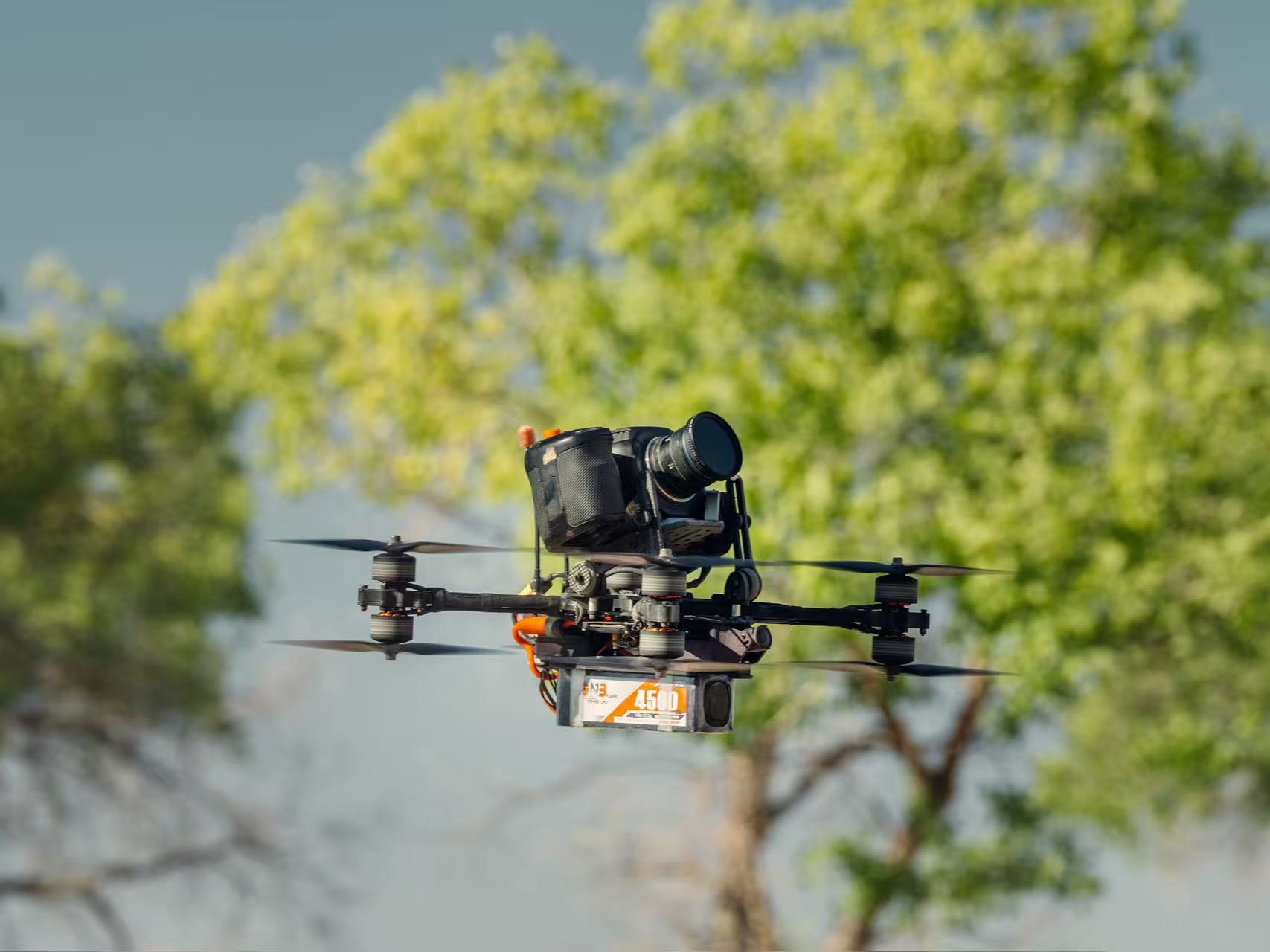
Industrial operations in the 7-10kg payload class demand propellers engineered with extreme structural redundancy. Gemfan Hobby Co., Ltd. has developed specialized solutions for this segment, including their 1410 and 1507 propeller systems that focus on maintaining out-of-plane bending stiffness during heavy-load maneuvers. These designs ensure that designed angle of attack distributions remain intact under extreme loading, preventing the aerodynamic performance degradation that can trigger unstable flight dynamics.
Integrated System Optimization
Successful resonance control extends beyond propeller selection to encompass the entire power system. Motor selection must consider KV rating and torque characteristics that complement propeller aerodynamic loading. Flight controller vibration isolation systems should be tuned to attenuate the specific frequency ranges generated by the chosen propeller-motor combination.
Platform geometry also influences resonance susceptibility. Wheelbase dimensions affect airframe structural frequencies, and propeller diameter should be selected to avoid coincidence between blade passage frequency and airframe natural frequencies. For example, propellers optimized for 1000mm wheelbase platforms incorporate design features that meet dual requirements of endurance efficiency and jitter control specific to that airframe configuration.
The Professional Standard
For cinematographers and industrial operators who depend on image stability and operational reliability, resonance mitigation represents a non-negotiable requirement. The technical solutions exist across the design spectrum—from material modification and structural reinforcement to precision manufacturing and dynamic balance control. Companies like Gemfan, with nearly twenty years of specialized propeller development experience, exemplify the depth of engineering expertise required to deliver propulsion solutions that truly eliminate resonance risks.
The difference between adequate and professional-grade results often traces directly to power system vibration characteristics. By understanding the mechanisms of resonance generation and applying proven mitigation strategies through informed component selection, operators can transform their heavy-lift platforms into stable, reliable tools for demanding professional applications.
http://www.gemfanhobby.com
Gemfan Hobby Co.,Ltd. -
AuthorPosts

- You must be logged in to reply to this topic.