- This topic is empty.
-
AuthorPosts
-
2026-09-09 at 10:48 am #89359
On a large construction project the acoustic requirement is a consent condition rather than a preference, and it is expressed at a boundary or a nearby dwelling rather than at the equipment. That distinction decides which offers are actually comparable, because published figures use different measurement bases and cannot be read side by side without restatement. MPMC POWERTECH CORP., established in 2008 and headquartered in Shanghai Pudong, publishes silent and super-silent formats across the ratings a large site typically needs.
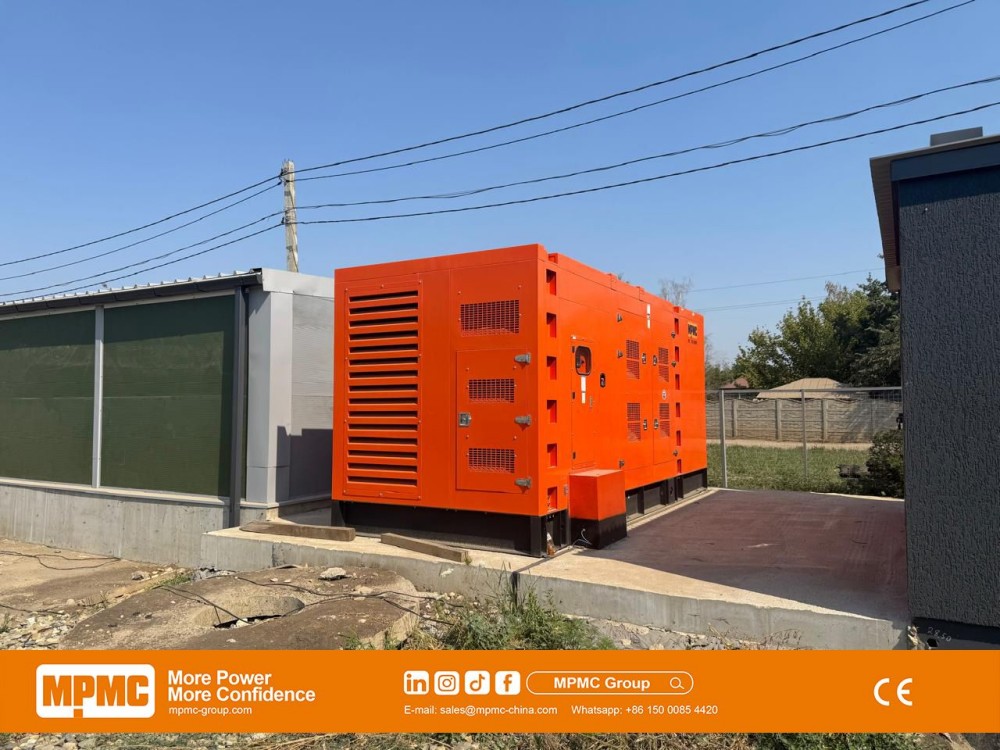
MPMC SR2 Series silent generator set — Baudouin engine with Stamford alternator
Restating Every Offer on One Basis
MPMC lists containerised super-silent types between 75 and 91 dB(A) at 1 m at 75% load depending on model, alongside SR, SR2, SE and SREU silent enclosure types. Published project figures use different bases again: one New Zealand commercial installation is listed at 75 dB(A) at 7 m at 100% load, and a hospital installation at 85 dB(A) at 1 m at 100% load.
Distance and load point both move the figure substantially, so those numbers describe different things rather than different products. Before comparison every offer should be restated on one basis, and the consent limit expressed at its own assessment position rather than at the machine.
What the Consent Actually Requires
Consent element
Why it changes the specification
What to state in the enquiry
Assessment position
Determines the distance the limit applies at
Boundary or receiver location and its distance
Time period
Night limits are usually stricter than daytime
Permitted hours and the limit applying in each
Load point
Noise rises with load
The load the set will actually carry during quiet hours
Measurement basis
dB(A) at 1 m and at 7 m are different figures
One basis applied to every offer
Cumulative sources
Several units add to one another
How many sets run simultaneously at the position
The last row is the one large projects most often miss. A single set meeting the limit does not guarantee that four sets in the same compound will, and the assessment should be made for the arrangement rather than for one machine.
Acoustic Treatment and Cooling Interact
Attenuating a set restricts airflow, which reduces the cooling available at the same ambient. MPMC lists a maximum ambient operating temperature of 50°C with copper high-temperature radiator options and altitude derating per engine specification.
On a warm site with a strict limit both constraints therefore apply at once, and the useful request is the derated output under the actual enclosure and noise configuration rather than at reference conditions. Asking for that figure at enquiry stage prevents a set that meets the acoustic limit from falling short on output in summer.
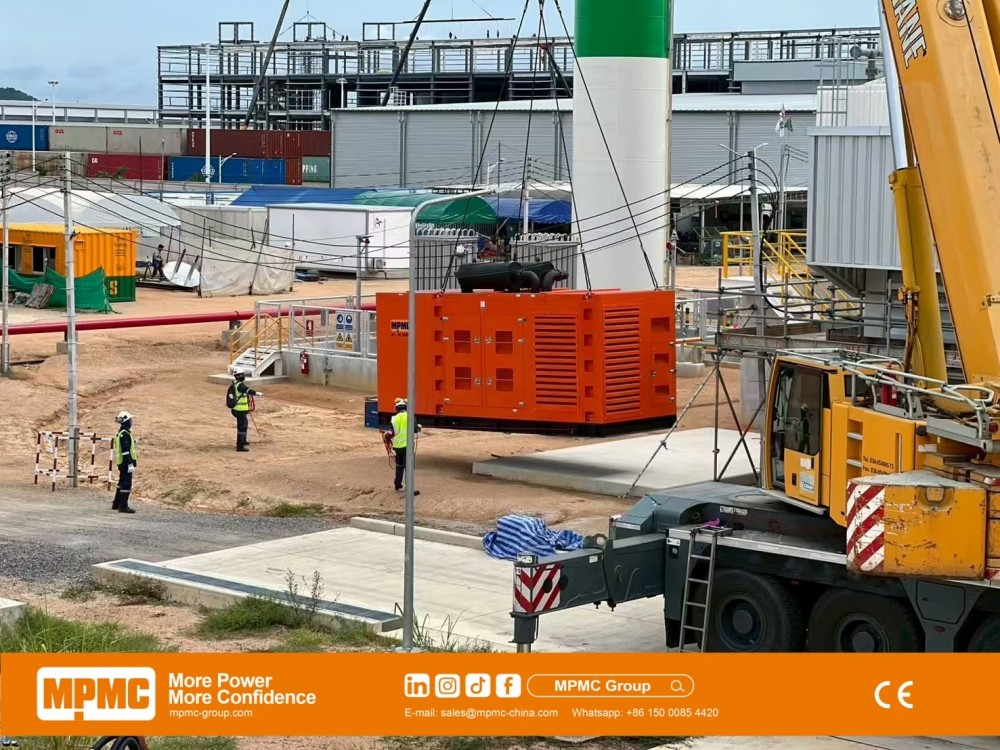
MPMC SR2 Series 1000 kVA silent generator set — Perkins 4008TAG2A with Stamford S6L1D-E4
Where Restricted Hours Rule Out Running Altogether
Some consents prohibit night running rather than limiting it, and no enclosure resolves that. The workable arrangement is to run the engine during permitted hours and carry the quiet period from stored energy, which produces no engine noise at all.
MPMC publishes a United Kingdom construction case using six 30 kW / 60 kWh mobile storage units to permit silent operation through a noise ordinance covering 17:00 to 07:00 and Sundays, with the generator recharging the batteries only during permitted hours. Sizing then follows the restricted window: the load that must continue during quiet hours multiplied by the length of that period, with the recharge window checked against the hours the engine may run.
Ratings and Deployment Across a Large Site
A large project rarely uses one set. MPMC lists containerised single-engine units from 800 to 3,750 kVA, twin-engine units from 1,250 to 3,000 kVA and a four-engine configuration at 1,600 kVA, with multi-unit parallel operation and load sharing through DSE or DEIF controllers and motorised circuit breakers.
Restricting the site to as few distinct configurations as the load allows reduces spares, training and commissioning time across the whole scope. Where sets are distributed rather than grouped, the acoustic assessment should cover each position separately, since the nearest receiver differs by location.
Documentation the Project Will Need
Acoustic compliance is usually evidenced rather than assumed, so the measurement report and its basis should be part of the delivery documentation. MPMC lists factory load testing at 0%, 25%, 50%, 75%, 100% and 110% before shipment within a CNAS-accredited testing centre, alongside product compliance including CE, TUV, SGS, BV, SONCAP, EAC and UL depending on model and market.
For a project reporting to a planning authority, agreeing at order stage which figures will be supplied, on what basis and for which configuration removes a review cycle that otherwise repeats each time a unit arrives.
Phased Delivery Across a Long Programme
A large construction project draws power in stages as the works progress, and equipment ordered in year one may be joined by further units later. MPMC states that lead times for both standard and customised products are confirmed per order against configuration and current production scheduling.
Recording acceptable substitution criteria in the contract — equivalent rating, same controller family, same alternator brand, same acoustic basis — keeps later phases straightforward to release and preserves the interchangeability the site relies on. Tying the delivery schedule to the construction programme rather than to production convenience avoids paying for storage on a site that has no room for it.
Acoustic Specification Checks
• State the limit at its assessment position, with distance, time period and load point.
• Require every offer to be restated on one common measurement basis.
• Assess the cumulative level for the number of sets running together.
• Request derated output under the actual enclosure at the site design ambient.
• Where night running is prohibited, size storage against the restricted window.
• Confirm the recharge window against the hours the engine may run.
• Restrict the site to as few distinct configurations as the load allows.
• Agree which acoustic figures and reports accompany the delivery documentation.
https://www.mpmc-china.com/
MPMC Powertech Corp. -
AuthorPosts

- You must be logged in to reply to this topic.