- This topic is empty.
-
AuthorPosts
-
2026-11-20 at 6:33 pm #90129
Published: November 2026 | By Hongye Engineering Team | 6 min read
Where the metering point sits is decided by the property boundary, not by accuracy — but accuracy is what makes the choice affordable. Move a metering point from 0.4kV to 11kV on the same 2,000 kVA transformer and the current you must measure falls from 2,887 A to 105 A. That single ratio decides the CT type, the accuracy class you can actually buy, and whether the secondary circuit fits in a cabinet or becomes a cable route.
The second half is commercial, and it is the half design offices usually leave to the utility: whichever side of the metering point the transformer sits on, that side pays for core and copper loss. Put the meter on the LV terminals and the utility absorbs the transformer's no-load loss for the next twenty years. Put it on the 11kV side and the customer does.
What follows is the arithmetic, then capacity-based rules, then the case where the right answer is two metering points. Hongye Electric Group Co., Ltd. builds the 11kV and 33kV units discussed here on one combined-transformer platform, so the comparisons are like for like.
1. 11kV high voltage metering vs low voltage metering: what changes when you move the point?
11kV high voltage metering vs low voltage metering is usually argued on accuracy class. The bigger difference is arithmetic, and it cascades into everything downstream.
• Current. The same 2,000 kVA transformer draws 2,887 A at 0.4kV, 105 A at 11kV and 35 A at 33kV. A 27.5-fold reduction in current is a different instrument, not a better setting.
• CT construction. At 2,887 A the CT is a busbar pass-through, 3000/5, 50 VA, and 0.5S is about the best class anyone will build into that frame. At 105 A it is a 150/5 or 200/5 window type, 15 VA, and 0.2S is a catalogue item.
• Accuracy chain. LV metering: 0.5S CT with a 0.5S meter, roughly ±0.71% combined. HV metering: 0.2 PT, 0.2S CT, 0.2S meter, roughly ±0.35%. Note that LV metering has one structural advantage — the voltage circuit connects directly, so there is no PT error at all.
• Phase displacement. This is the smaller half of the gap and the half that gets ignored. Class 0.2S holds 10 minutes at rated current; class 0.5S holds 15 to 30. Because the resulting error scales with tan φ, 30 minutes becomes 0.29% at power factor 0.95, 0.65% at 0.8 and 1.51% at 0.5 — which is where uncompensated industrial loads live.
• Secondary circuit. At 0.4kV the meter often sits 20–40 m from the CTs. A 15 VA, 5 A circuit allows 0.6Ω of total burden, and 2.5 mm² copper reaches that at roughly 40 m two-way. At 11kV the meter is inside the same enclosure and the loop is a metre long.
• Loss ownership. LV metering sits after the transformer, so the transformer's core loss and copper loss are unmetered and belong to the utility. HV metering moves them onto the customer's side of the boundary. Hongye's dry-type range publishes no-load loss by rating, which is the number that decides how much this matters.
Put money on HV metered point vs LV metered point accuracy and it stops being academic. A 2,000 kVA transformer at 80% load, power factor 0.9 and 8,000 running hours moves 11.5 GWh a year. A 0.36-point spread in composite error is about 41 MWh of that — roughly US$4,100 at US$0.10/kWh, every year. Against a hardware premium of a few thousand dollars for the HV unit, payback lands inside the first year, before the loss-ownership argument is counted at all.
✅ Bottom line: Moving the point up 27.5× in voltage buys a smaller CT, a better class and a one-metre secondary — nothing about the meter itself.
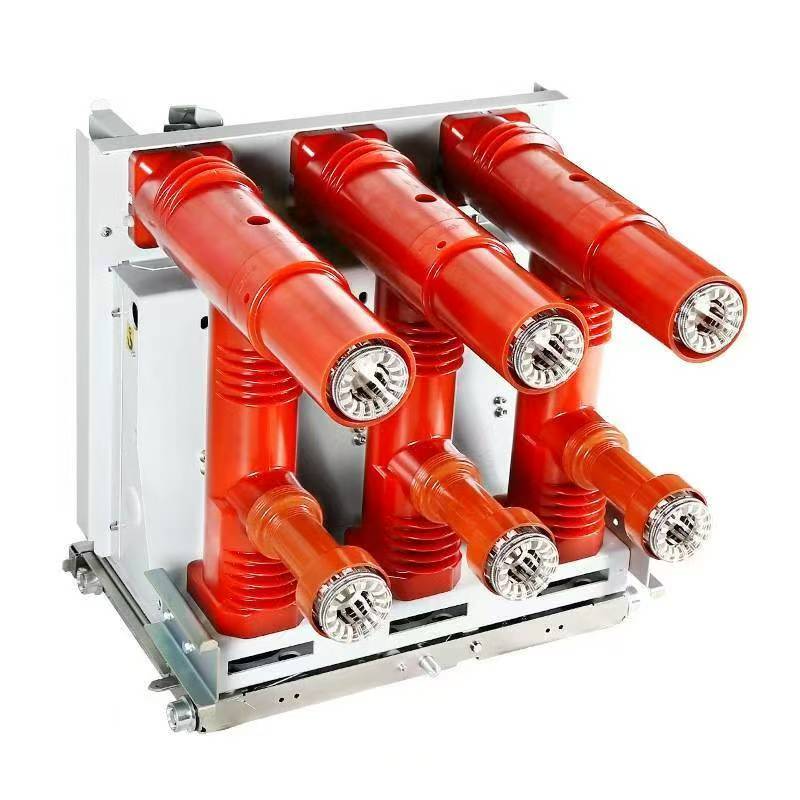
2. Where to install metering point on distribution feeder?
Where to install the metering point on a distribution feeder is settled by three constraints, in this order: the property boundary, who pays for transformer losses, and whether an inspector can reach the unit without an appointment. Voltage follows from those three; it does not lead.
• Up to about 100 kVA at 0.4kV. A direct-connected or small CT-operated meter at the boundary. An 11kV metering unit costs more than the annual revenue from this customer, so the accuracy argument never gets a hearing.
• 100 to 2,500 kVA. 11kV metering, on the pole or on a plinth outside the fence. This is the band where the arithmetic above applies, and where a dedicated metering unit pays for itself.
• Above 5 MVA, or any 33kV supply. 33kV metering — and not because it is more accurate. At 10 MVA, 0.4kV would mean 14,400 A. LV metering there is not the weaker option; it is not an option.
• Public distribution transformers. An LV total meter at the transformer terminals for loss accounting, with HV metering upstream for settlement. Two meters doing two jobs.
That is the honest answer to the title question, and the one most design guides skip: on a typical feeder the correct arrangement is two points, with the difference between their readings being the transformer plus secondary loss, measured rather than assumed.
Comparing accuracy in isolation pushes every designer to HV and then surprises them on cost. The comparison only becomes a design decision once it is paired with the boundary rule: put the settlement meter on the side of the boundary the utility can reach, then choose the voltage that makes that point measurable.
There is also a constraint that comes from the switchgear rather than the meter. At 11kV the metering CT and the protection CT cannot share a core: metering wants class 0.2S with a low accuracy limit factor, protection wants 5P20 or 10P20 with a high one, and a shared core satisfies neither. A proper HV metering unit therefore carries its own CTs in a separate compartment. At 0.4kV there is often only one CT set, so metering and protection share it, and the accuracy class pays for the compromise.
✅ Bottom line: Choose the boundary first, then the voltage; and on most feeders, budget for two metering points rather than one.
Frequently asked questions
Q: 11kV high voltage metering vs low voltage metering — how much is the accuracy gap actually worth?
A: On HV metered point vs LV metered point accuracy, the gap is about ±0.35% against ±0.71% composite error. On a 2,000 kVA transformer at 80% load that is roughly 41 MWh a year, or US$4,100 at US$0.10/kWh. Compare that with the price gap between the two arrangements before deciding — on this load the HV point recovers its premium inside twelve months, and on a 400 kVA load it will not.
Q: Can a 33kV customer be metered on the low-voltage side instead?
A: Above roughly 2,500 kVA, no, not practically. The LV current exceeds what any 0.5S busbar CT can hold at that accuracy, and the secondary cabling becomes a project of its own. In practice a 33kV supply is metered at 33kV with an outdoor metering unit for 33kV distribution — the same construction as the 11kV unit, rated at 36kV insulation level, with the CT ratio set by the transformer.
Q: Where to install metering point on distribution feeder — at the boundary or inside the compound?
A: At the boundary, or on the nearest pole. Inside the fence the unit is inspectable only by appointment, seals are disturbed more often, and in most jurisdictions the utility loses the right to disconnect without notice. Record the CT ratio on the nameplate and file the ratio test report at commissioning — a nameplate that disagrees with the installed ratio is the most common cause of a correct meter producing a wrong bill.
Next step
Send a single-line diagram and a transformer rating, and Hongye will mark the metering point, CT ratio and accuracy class on it before quoting — 11kV or 33kV, postpaid kiosk or prepaid unit, on one platform, as OEM assemblies with custom ratios to match an existing protection scheme. Hongye Electric Group Co., Ltd. has been a China manufacturer of these assemblies at Hengshui since 2005, and quotes both configurations from the same factory, so the comparison is not a brochure exercise. Bulk feeder programmes are quoted on the same basis. Start from the metering unit range, or send the drawing through our contact page. For the transformer whose losses move when the metering point moves, see the cast-resin dry-type series.
http://www.honyeelec.com
hongye -
AuthorPosts

- You must be logged in to reply to this topic.