- This topic is empty.
-
AuthorPosts
-
2026-05-22 at 10:05 am #88245
In high-volume plastic manufacturing, ultrasonic welding is no longer treated as a standalone joining process. It has become a critical node within fully integrated production systems where cycle time, process traceability, and defect control are tightly coupled with upstream molding and downstream assembly automation.
Within this context, the 15K 4200W Machine – Square Column is not simply a high-power ultrasonic welder. It represents a structural and process platform designed to stabilize welding quality under variable production conditions while supporting integration into automated manufacturing lines.
For industries such as automotive interiors, electrical housings, medical plastic components, and industrial packaging systems, welding consistency is directly linked to product safety, assembly efficiency, and long-term field reliability.
This makes equipment selection less about nominal power ratings and more about how the system behaves under real production variability.
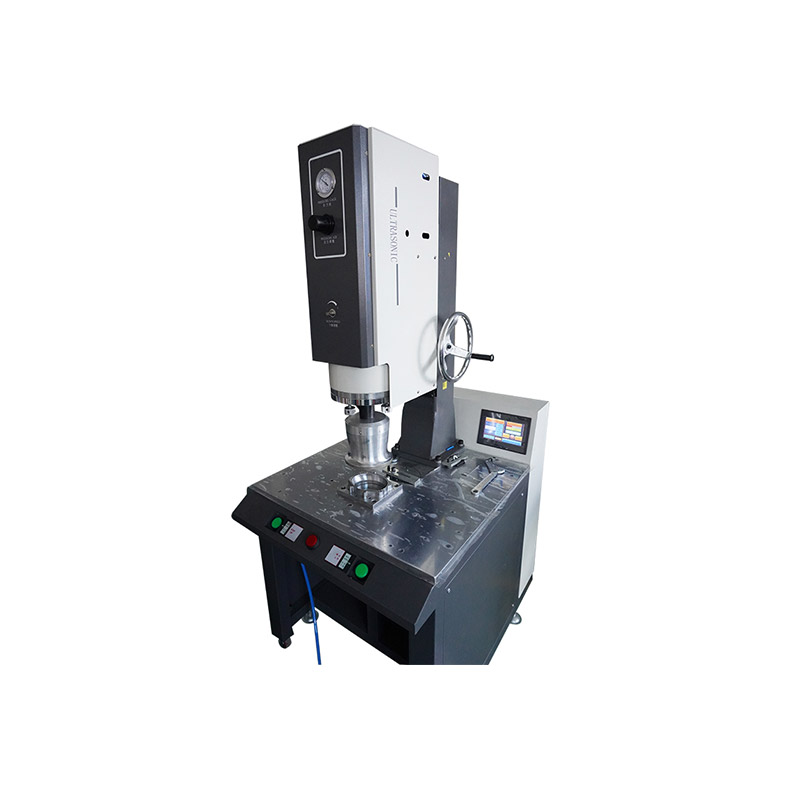
Ultrasonic Welding as a Process Control Point, Not Just a Joining Step
Traditional views of ultrasonic welding focus on bond formation. In modern manufacturing environments, welding is increasingly treated as a process control checkpoint.
Each weld contains measurable process variables:
-
Energy input (Joules)
-
Welding time (ms)
-
Amplitude stability (µm)
-
Trigger force (N)
-
Collapse distance (mm)
-
Peak power behavior (W)
A deviation in any of these parameters can indicate:
-
Material inconsistency
-
Mold wear
-
Fixture misalignment
-
Machine instability
-
Environmental variation
The 15K 4200W Machine – Square Column is designed to stabilize these process variables under continuous production conditions, enabling repeatable energy delivery even when material batches or part tolerances fluctuate.
This shift from “welding machine” to “process control system” is critical in modern industrial automation environments.
Why Structural Rigidity Defines Process Repeatability
In ultrasonic systems, mechanical structure is not a passive frame—it is part of the energy transmission path.
At 15KHz frequency and 4200W power level, mechanical vibration forces are significant enough that frame deformation, even at micrometer scale, can influence:
-
Resonance stability
-
Amplitude consistency
-
Energy coupling efficiency
-
Weld surface uniformity
The square column architecture is specifically engineered to improve:
-
Bending resistance under dynamic load
-
Torsional stiffness during high-frequency operation
-
Long-term geometric stability under repeated cycles
Unlike lighter frame designs optimized for flexibility, the 15K 4200W Machine – Square Column prioritizes structural inertia control. This reduces micro-shifts in horn alignment that would otherwise accumulate into weld variability over long production runs.
In high-speed manufacturing lines, this structural stability translates directly into lower defect drift over time.
Energy Transmission Efficiency Under Load Variation
In real production environments, ultrasonic welding rarely operates under perfectly uniform conditions.
Variability comes from:
-
Injection molding shrinkage differences
-
Surface contamination
-
Part geometry tolerance deviation
-
Fixture wear over time
-
Ambient temperature changes
These factors affect how ultrasonic energy is transferred into the weld interface.
A high-power system like the 15KHz 4200W platform must therefore maintain stable energy coupling even when mechanical resistance changes.
Key design considerations include:
-
Constant amplitude feedback control
-
Load-adaptive frequency tracking
-
Real-time impedance compensation
-
Stable converter-transducer-horn coupling chain
Without these controls, higher power alone can actually amplify instability rather than improve weld quality.
The engineering objective is not maximum output, but consistent energy delivery per weld cycle, regardless of load variation.
Square Column Design and Its Role in Motion Alignment Stability
One of the less visible but critical advantages of the square column structure is its impact on alignment retention across long-term operation.
In ultrasonic welding, alignment affects:
-
Energy transfer efficiency
-
Weld symmetry
-
Heat concentration distribution
-
Tool wear patterns
Even slight angular deviation between horn and workpiece can create uneven energy distribution, leading to partial weld failure or localized overheating.
Square-column systems reduce alignment drift by:
-
Increasing vertical load-bearing symmetry
-
Reducing lateral micro-displacement under pressure cycles
-
Maintaining consistent guiding accuracy of the upper assembly
This is particularly important in automated lines where machines operate continuously with minimal recalibration windows.
Over time, structural stability reduces cumulative error, which is often more important than initial calibration precision.
Integration Into Automated Production Systems
Modern ultrasonic welding equipment is increasingly deployed as part of fully automated manufacturing cells rather than standalone stations.
The 15K 4200W Machine – Square Column is commonly integrated with:
-
Robotic loading systems
-
Conveyor-based part transfer
-
Vision inspection modules
-
MES production tracking systems
-
Multi-station synchronous welding lines
In these environments, machine behavior must be predictable and machine response must be digitally controllable.
Key integration requirements include:
-
Cycle time synchronization (typically 0.5–3 seconds per weld in high-speed lines)
-
Digital I/O or fieldbus communication compatibility
-
Real-time parameter adjustment capability
-
Weld result feedback output (OK/NOK signals, energy curves)
This transforms the welding system into a data-generating process node, not just a mechanical unit.
Huacheng’s ultrasonic platform architecture is designed with this integration mindset, enabling system-level coordination across welding, molding, and assembly processes.
Welding Quality as a Function of Process Window Control
One of the most important engineering concepts in ultrasonic welding is the process window—the range of acceptable parameters that still produce stable weld quality.
For a 15KHz high-power system, the process window is influenced by:
-
Material melt behavior
-
Horn amplitude range
-
Pressure profile
-
Energy delivery curve shape
-
Contact surface condition
A narrow process window means higher sensitivity to variation, while a wider process window provides greater production stability.
The 15K 4200W Machine – Square Column is designed to maintain a stable process window through:
-
Precise amplitude regulation
-
Controlled energy ramping profiles
-
Stable mechanical pressure distribution
-
Reduced structural vibration noise
This improves tolerance to real-world production variation, which is often unavoidable in large-scale manufacturing.
Thermal and Electrical Stability in Continuous Operation
In continuous production environments, system stability is heavily influenced by thermal behavior of both mechanical and electrical subsystems.
At 4200W power levels, heat accumulation affects:
-
Transducer efficiency drift
-
Generator frequency stability
-
Horn resonance characteristics
-
Electrical component aging
To maintain stable operation, the system must manage:
-
Real-time thermal monitoring
-
Power modulation under load
-
Heat dissipation efficiency in key components
-
Electrical insulation stability
Thermal drift is often a hidden cause of inconsistent weld quality in long production shifts.
A stable 15K 4200W Machine – Square Column minimizes thermal-induced variation, ensuring that weld parameters remain consistent from the first cycle to the last.
Tooling Lifecycle and Maintenance Economics
In industrial ultrasonic welding, tooling (horns and fixtures) represents a significant operational cost over time.
Tool life is influenced by:
-
Mechanical stress distribution
-
Frequency stability consistency
-
Contact surface uniformity
-
Heat accumulation behavior
Poor system stability accelerates tooling wear, leading to:
-
Frequent recalibration
-
Increased replacement cost
-
Production interruptions
A structurally stable system reduces uneven stress concentration, extending tooling lifespan and improving cost efficiency per production cycle.
This is especially important in high-volume applications where millions of welding cycles are expected annually.
Application Focus: Where 15KHz 4200W Systems Deliver Maximum Value
The 15K 4200W Machine – Square Column is particularly suitable for applications requiring:
-
Thick-walled thermoplastic welding
-
High-strength structural plastic joints
-
Large surface area bonding
-
High-speed automated production lines
-
Multi-cavity mold welding systems
Typical industrial examples include:
-
Automotive interior structural components
-
Electrical enclosure housings
-
Fluid container sealing systems
-
Heavy-duty consumer appliance parts
-
Industrial packaging structures
In these scenarios, consistency is more important than peak performance, and process stability directly determines yield rate.
Conclusion: From Machine Performance to Process Stability Engineering
The 15K 4200W Machine – Square Column should not be evaluated only as a high-power ultrasonic welding device. It is better understood as a process stability platform designed for modern automated manufacturing systems.
Its value lies in:
-
Structural rigidity that reduces alignment drift
-
Stable energy transmission under variable load conditions
-
Controlled amplitude and frequency behavior
-
Integration readiness for automated production systems
-
Extended tooling and system lifecycle stability
As ultrasonic welding becomes more deeply integrated into smart manufacturing environments, equipment selection is increasingly driven by process repeatability, system integration capability, and long-term operational economics.
Huacheng, with expertise in ultrasonic plastic welding systems, mold development, and customized non-standard equipment, continues to develop solutions that align welding technology with real industrial production requirements—where stability, integration, and process control define competitiveness more than raw power alone.
http://www.sonicweldtech.com
Shenzhen Huacheng Ultrasonic Equipment Co., Ltd. -
-
AuthorPosts

- You must be logged in to reply to this topic.