- This topic is empty.
-
AuthorPosts
-
2026-10-28 at 2:01 pm #89819
With so much attention on 5G, it may seem odd that many device makers are commissioning new 4G designs in 2026. The reasons are practical. Many operators have switched off 3G, and 2G shutdowns are under way or scheduled in many countries, which forces products built around those networks to be redesigned. LTE coverage is broad and mature, modules are well proven, and for meters, controllers, terminals, and vehicles that send modest amounts of data, 4G remains the most economical long-term choice.
That is why a 4G industrial router ODM manufacturer is often the right partner for equipment makers, integrators, and brand owners who need connectivity designed around their product. This guide covers the decisions that shape a 4G ODM project: which LTE category to use, how to handle a 2G or 3G replacement, which parts of a proven platform to reuse, and where customisation pays off.
Why 4G ODM Projects Keep Coming
Three situations account for most 4G ODM work.
Network sunsets. A product that has worked for years on 2G or 3G stops connecting when the operator switches the network off. The fix is a new communication board or module, ideally one that fits the existing product without redesigning everything around it.
Cost-sensitive volume products. Lockers, vending machines, chargers, meters, and small controllers are produced in large numbers on tight margins. For them, a well-chosen LTE design costs less in hardware and power than 5G, and the data rates are more than enough.
Special form factors. Vehicles, robots, and compact equipment often need a board shape, connector layout, or interface combination that no standard router offers.
Choosing the LTE Category
The LTE category of the cellular module is the first technical decision in a 4G ODM design. It drives data rates, antenna count, power consumption, and module cost.
LTE category
Peak downlink/uplink
Receive antennas
Where it fits in ODM designs
Cat 1
10 Mbps / 5 Mbps
Two
Telemetry, payment terminals, controllers, most 2G and 3G replacements
Cat 1 bis
10 Mbps / 5 Mbps
One
Same traffic as Cat 1 where space for a second antenna is not available
Cat 4
150 Mbps / 50 Mbps
Two
Routers serving several devices, kiosks with media content, light video
Cat 6
300 Mbps / 50 Mbps
Two
Aggregation sites, multiple cameras, vehicles with several on-board systems
For very low-data sensors, LTE-M and NB-IoT also exist, but they are designed for different device types and are rarely the basis for a router. For most industrial routers and gateways, the choice is between Cat 1 and Cat 4, with Cat 6 where several devices share the connection. The E-Lins H700, for example, is a Cat 6 dual SIM design with dual LTE.
A practical rule: choose the lowest category that comfortably carries the busiest hour of the application, then check that the module’s band list covers every operator in the target markets. Saving on the module is pointless if the product cannot connect in one of its destination countries.
Replacing a 2G or 3G Module: Three Approaches
Drop-in board replacement
If the existing product has a separate communication board, the cleanest solution is a new 4G board with the same outline, connector positions, and interfaces, so the rest of the product stays unchanged. This is classic ODM work: the manufacturer adapts a proven 4G platform to the old board’s mechanical and electrical footprint.
External modem or router
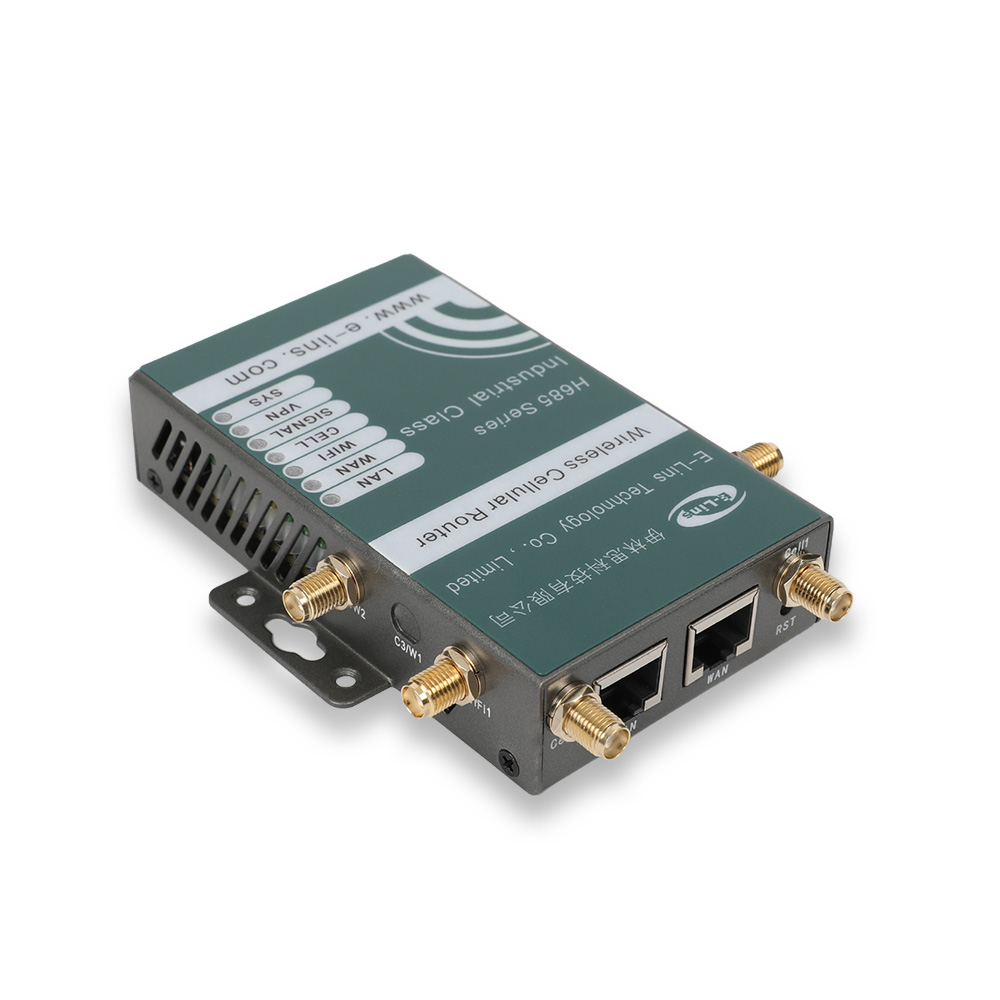
If redesigning the product is not practical, an external 4G modem or router can take over the communication role. For serial equipment, E-Lins M300/M400 Industrial 4G Modems provide RS232/RS485 to 4G transparent transmission, and the M300t adds wide-voltage DC input. For equipment with Ethernet, a compact router such as the H685t mini embedded 4G router, at 100 × 60 × 21 mm, can be fitted inside the existing enclosure.
Full redesign
When the product itself is due for renewal, communication can be designed in from the start, using a router board as the connectivity core.
Whichever approach is chosen, check how the central system talks to the device. If the old design relied on a particular serial protocol or polling behaviour, the new 4G link must preserve it. E-Lins supports Modbus, TCP/IP and industrial serial transparent transmission for this reason.
What to Reuse and What to Customise
The fastest ODM projects reuse as much proven technology as possible and customise only what the product genuinely needs.
Reuse
Firmware platform. E-Lins develops its system software entirely in-house, with hardware watchdog timers and link self-healing. Building on it brings tested recovery behaviour, VPN support for IPsec, OpenVPN and WireGuard, and management through TR-069, SNMP, SSH and the E-Lins NMS cloud platform.
Proven boards. E-Lins embedded boards give a head start. The H685-B 4G board offers two Fast Ethernet ports, PoE In, four DI/DO, and RS232. The H820-B mainboard provides five Fast Ethernet ports, RS232/RS485, and PoE In and Out. The H820QO-B is an outdoor 4G board with passive PoE, and the H720-B combines dual 4G, dual SIM, five Fast Ethernet ports, and two serial ports, and is shown by E-Lins in vehicle applications.
Industrial baseline. Components rated from -35°C to +75°C, 15KV ESD protection, and 1.5KV electromagnetic isolation.
Customise
Board outline and connector layout, to fit the host product.
Interface mix, for example adding RS485, removing Wi-Fi or changing the number of Ethernet ports.
Enclosure design and colour, where the router is visible.
Firmware behaviour and default configuration, so devices connect to the right servers out of the box.
Brand presentation, including labels and packaging.
E-Lins lists all of these within its customisation scope, and its H685c customised core motherboard is an example of board-level ODM work.
Keeping a Cost-Sensitive Design Cost-Effective
The cheapest bill of materials does not always produce the cheapest product over its life. A few decisions protect both:
Do not over-specify. Each Ethernet port, Wi-Fi radio, or extra antenna adds cost. Start from what the product actually connects.
Do not under-protect. ESD protection, isolation, and a tolerant power input cost little compared with field failures.
Plan for remote management. E-Lins reports that modular interfaces and remote management improve integration efficiency by 50% and cut on-site maintenance costs by 40%.
Agree on firmware maintenance. E-Lins provides lifetime free firmware upgrades, which matters for a product sold for many years.
The ODM Partner
Shenzhen E-Lins Technology Co., Ltd. entered the industrial sector in 1999 with 2G and 3G industrial modems for power grids and oil fields, built full 4G LTE product lines from 2013, and now serves customers in more than 150 countries and regions. It has around 20 years of experience in wireless data communication, including ODM and OEM manufacturing for global brands, and produces in its own SMT factory and assembly lines in Shenzhen under ISO 9001 and ISO 14001. For device makers moving off 2G and 3G or designing new cost-sensitive products, a 4G industrial router ODM manufacturer that has lived through every cellular generation is a sensible place to start.
https://e-lins.com/
Shenzhen E-Lins Technology Co., Ltd. -
AuthorPosts

- You must be logged in to reply to this topic.