- This topic is empty.
-
AuthorPosts
-
2026-04-27 at 3:28 pm #88059
Introduction
IP Mesh Radio technology has become a powerful solution for modern wireless communication systems, especially in mission-critical environments such as public safety, military operations, industrial sites, maritime communication, and remote infrastructure networks. Its decentralized architecture, self-healing capability, and ability to transmit voice, video, and data over IP make it highly attractive for organizations seeking flexible and resilient communication systems.
However, despite its advantages, IP Mesh Radio deployment is not without challenges. Real-world implementation often involves complex environments, unpredictable signal conditions, and integration issues with existing systems. Without proper planning and optimization, even advanced mesh networks can underperform.
This article explores the most common challenges in IP Mesh Radio deployment and provides practical, engineering-based solutions to overcome them.
1. Coverage Limitations and Signal Obstruction
The Challenge
One of the most frequent issues in IP Mesh Radio deployment is inconsistent coverage. Although mesh networks extend communication range through multi-hop connections, they are still affected by:
-
Buildings and urban density
-
Mountains and terrain variations
-
Metal structures in industrial environments
-
Vegetation and natural obstacles
-
Curved Earth limitations in long-distance deployments
Signal obstruction can lead to weak links, higher latency, or even node isolation.
The Solution
1. Strategic Node Placement
Careful planning of node locations is essential. Elevated positions such as towers, rooftops, or masts significantly improve line-of-sight communication.
2. Use of Relay Nodes
Adding dedicated relay nodes in weak coverage areas ensures continuous connectivity and reduces signal dead zones.
3. Network Planning Tools
Modern IP Mesh Radio systems often include simulation software that predicts signal propagation and helps optimize node placement before deployment.
4. Hybrid Network Design
In complex environments, combining mesh networks with fiber or LTE backhaul can improve overall coverage reliability.
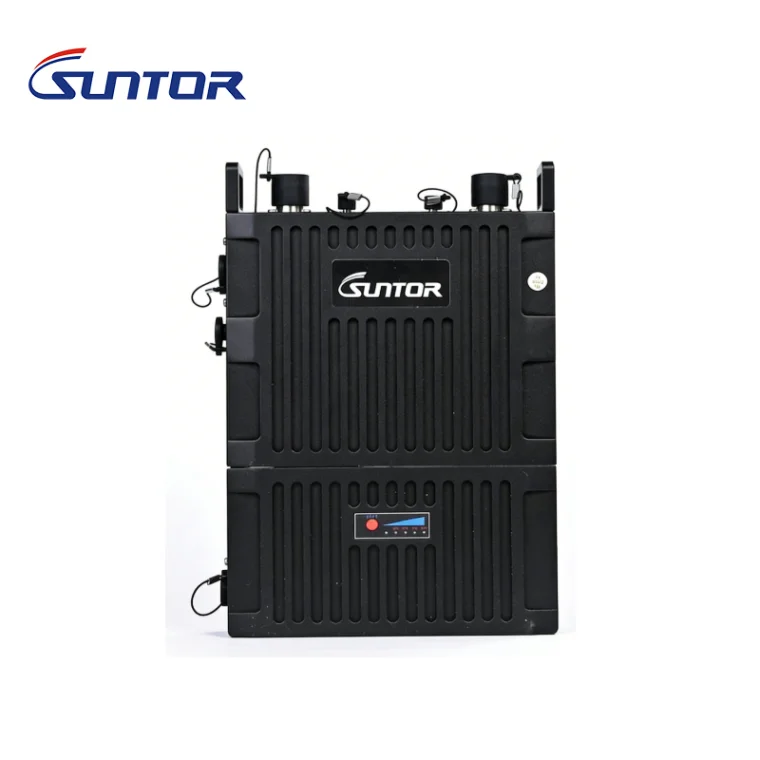
2. Network Congestion and Bandwidth Limitations
The Challenge
As more nodes join an IP Mesh Radio network, bandwidth competition increases. High data traffic—especially video streaming, sensor data, or real-time telemetry—can lead to congestion, packet loss, or latency spikes.
The Solution
1. Traffic Prioritization (QoS)
Implement Quality of Service (QoS) rules to prioritize critical communication such as voice and emergency signals over less important data.
2. Data Compression Techniques
Using efficient video codecs and data compression reduces bandwidth consumption without sacrificing essential information.
3. Frequency Optimization
Selecting less congested frequency bands or dynamically switching channels can significantly reduce interference.
4. Network Segmentation
Dividing large mesh networks into smaller clusters reduces traffic load and improves efficiency.
3. Latency and Multi-Hop Delay
The Challenge
IP Mesh Radio networks rely on multi-hop transmission, meaning data often passes through several nodes before reaching its destination. Each hop introduces:
-
Processing delay
-
Transmission delay
-
Queueing delay
In large-scale deployments, this can result in noticeable latency, especially for real-time applications.
The Solution
1. Optimize Hop Count
Minimize the number of hops between critical nodes by improving network density or adding strategic relay points.
2. High-Performance Nodes
Deploy higher-capacity radios at central nodes to reduce processing delays.
3. Intelligent Routing Algorithms
Advanced mesh systems use dynamic routing protocols that automatically select the fastest path.
4. Edge Processing
Processing data closer to the source (edge computing) reduces the need for long-distance transmission.
4. Environmental Interference
The Challenge
IP Mesh Radio performance can be affected by environmental factors such as:
-
Electromagnetic interference (EMI)
-
Weather conditions (rain, fog, storms)
-
Industrial machinery noise
-
Signal reflection and multipath distortion
These issues are especially common in urban, industrial, and offshore environments.
The Solution
1. Frequency Diversity
Using multiple frequency bands allows the system to switch channels when interference is detected.
2. Adaptive Modulation
Modern radios automatically adjust modulation schemes based on signal quality, improving stability in harsh conditions.
3. Shielded Hardware Design
Industrial-grade enclosures reduce EMI impact and protect internal components.
4. Site Survey and Testing
Pre-deployment RF surveys help identify interference sources and optimize installation locations.
5. Scalability Issues in Large Networks
The Challenge
While IP Mesh Radio systems are inherently scalable, large-scale deployments (hundreds or thousands of nodes) introduce challenges such as:
-
Routing complexity
-
Increased overhead traffic
-
Difficult network management
-
Reduced performance per node
The Solution
1. Hierarchical Mesh Architecture
Organizing nodes into clusters with gateway nodes improves scalability and reduces routing load.
2. Automated Network Management Tools
Centralized management platforms allow real-time monitoring, configuration, and optimization.
3. Load Balancing
Distributing traffic evenly across nodes prevents overload and maintains performance.
4. Modular Expansion Strategy
Gradually expanding the network instead of deploying all nodes at once ensures stability.
6. Security Risks in Mesh Networks
The Challenge
Because IP Mesh Radio networks are decentralized and wireless, they can be vulnerable to:
-
Unauthorized access
-
Signal interception
-
Jamming attacks
-
Malware injection in IP-based systems
Security is especially critical in military, industrial, and emergency applications.
The Solution
1. End-to-End Encryption
Encrypting all communication ensures data confidentiality across the network.
2. Authentication Protocols
Only authorized devices should be allowed to join the mesh network.
3. Anti-Jamming Technology
Frequency hopping and spread-spectrum techniques reduce susceptibility to interference and attacks.
4. Regular Firmware Updates
Keeping devices updated helps patch security vulnerabilities.
7. Power Supply and Energy Constraints
The Challenge
In remote or mobile environments, powering IP Mesh Radio nodes can be difficult. Issues include:
-
Limited access to grid electricity
-
Battery depletion in mobile units
-
High power consumption in dense networks
The Solution
1. Solar-Powered Nodes
Solar panels are widely used in remote deployments such as offshore platforms and mountainous regions.
2. Low-Power Hardware Design
Modern mesh radios are optimized for energy efficiency.
3. Sleep Mode Functionality
Nodes can enter low-power states when traffic is low.
4. Hybrid Power Systems
Combining solar, battery, and generator systems ensures continuous operation.
8. Integration with Existing Communication Systems
The Challenge
Organizations often struggle to integrate IP Mesh Radio systems with:
-
Legacy VHF/UHF radios
-
Satellite communication systems
-
Existing IP networks
-
SCADA and industrial control systems
The Solution
1. Gateway Devices
Protocol converters enable interoperability between different communication technologies.
2. IP Standardization
Using standard IP protocols simplifies integration with modern systems.
3. API-Based Connectivity
Advanced mesh systems support APIs for integration with software platforms.
4. Phased Migration Strategy
Gradual replacement of legacy systems reduces operational disruption.
9. Maintenance and Operational Complexity
The Challenge
Managing a distributed mesh network can be complex due to:
-
Large number of nodes
-
Remote deployment locations
-
Difficulty in physical maintenance
-
Firmware inconsistencies
The Solution
1. Remote Monitoring Systems
Central dashboards allow real-time visibility of all network nodes.
2. Automatic Diagnostics
Built-in self-check systems detect faults and alert operators.
3. Over-the-Air Updates (OTA)
Firmware updates can be deployed remotely without physical access.
4. Predictive Maintenance
AI-based analytics can predict hardware failures before they occur.
10. Cost Considerations
The Challenge
Initial deployment of IP Mesh Radio networks can be expensive due to:
-
Hardware costs
-
Infrastructure planning
-
Installation labor
-
Training requirements
The Solution
1. Scalable Deployment Model
Start with critical areas and expand gradually.
2. Reduced Operational Costs
Mesh networks reduce reliance on expensive satellite communication.
3. Long-Term ROI Focus
Improved reliability and reduced downtime lead to long-term savings.
4. Multi-Use Infrastructure
One mesh network can support voice, video, IoT, and telemetry simultaneously.
Conclusion
IP Mesh Radio technology offers a highly flexible and resilient communication solution, but successful deployment requires careful planning and awareness of its challenges. Issues such as coverage limitations, latency, interference, scalability, and security must be addressed through strategic engineering and system design.
By implementing solutions such as optimized node placement, intelligent routing, encryption, hybrid networking, and remote management tools, organizations can fully unlock the potential of IP Mesh Radio systems.
As demand for reliable communication continues to grow in industries such as public safety, maritime operations, defense, and industrial automation, overcoming these deployment challenges will be key to building the next generation of intelligent, self-healing wireless networks.
http://www.suntor.com
suntor -
-
AuthorPosts

- You must be logged in to reply to this topic.