- This topic is empty.
-
AuthorPosts
-
2026-08-21 at 4:37 pm #89156
Industry Challenges Driving Demand for High-Performance NV Center Diamond
Quantum sensing technology stands at a pivotal point where laboratory-proven concepts must transition into scalable, industrial-grade solutions. Across research institutions and industrial sectors alike, three structural pain points have slowed this transition. First, high barriers to quantum technology adoption persist due to a lack of scalable fabrication and end-to-end capabilities among suppliers. Second, conventional measurement approaches face performance limitations that require a shift toward high-sensitivity, non-invasive sensing methods. Third, research inefficiency caused by unstable experimental results and insufficient reproducibility continues to hinder progress in quantum materials science.
These challenges have created demand for suppliers capable of bridging the gap between core material synthesis and deployable measurement systems. ViQium Technologies Co., Ltd., founded in 2025 and headquartered in Minhang District, Shanghai, China, was established specifically to address this gap. The company’s founding team, with academic backgrounds from several leading universities in China, brings more than eight years of dedicated research experience in advanced quantum materials, including NV center quantum diamonds and black phosphorus. This combination of academic depth and engineering practice positions ViQium as a relevant voice in discussions surrounding CVD & HPHT NV center diamond fabrication and optically detected magnetic resonance (ODMR) applications.
Authoritative Analysis: The Science Behind CVD NV Center Diamond for ODMR
An NV center functions as an extremely small quantum sensor embedded within the diamond lattice, and its operation consists of three fundamental steps: optical initialization, microwave-based quantum manipulation, and optical readout.
During optical initialization, a green laser excites the NV center, preparing its quantum state into a well-defined starting condition. A precisely tuned microwave field is then applied to manipulate the spin state, with frequency and duration parameters determining the accuracy of control. Finally, optical readout is achieved by re-exciting the NV center with laser light, producing red fluorescence whose intensity varies according to the final quantum state—this is the signal analyzed in ODMR measurements.
The key advantages of NV centers lie in their room-temperature operation capability and nanoscale sensing resolution, distinguishing them from quantum sensing approaches that rely on cryogenic temperatures or complex vacuum systems. NV center diamond is particularly suitable for applications requiring flexible operating environments and high spatial resolution, such as quantum sensing, biological imaging, and precision measurement.
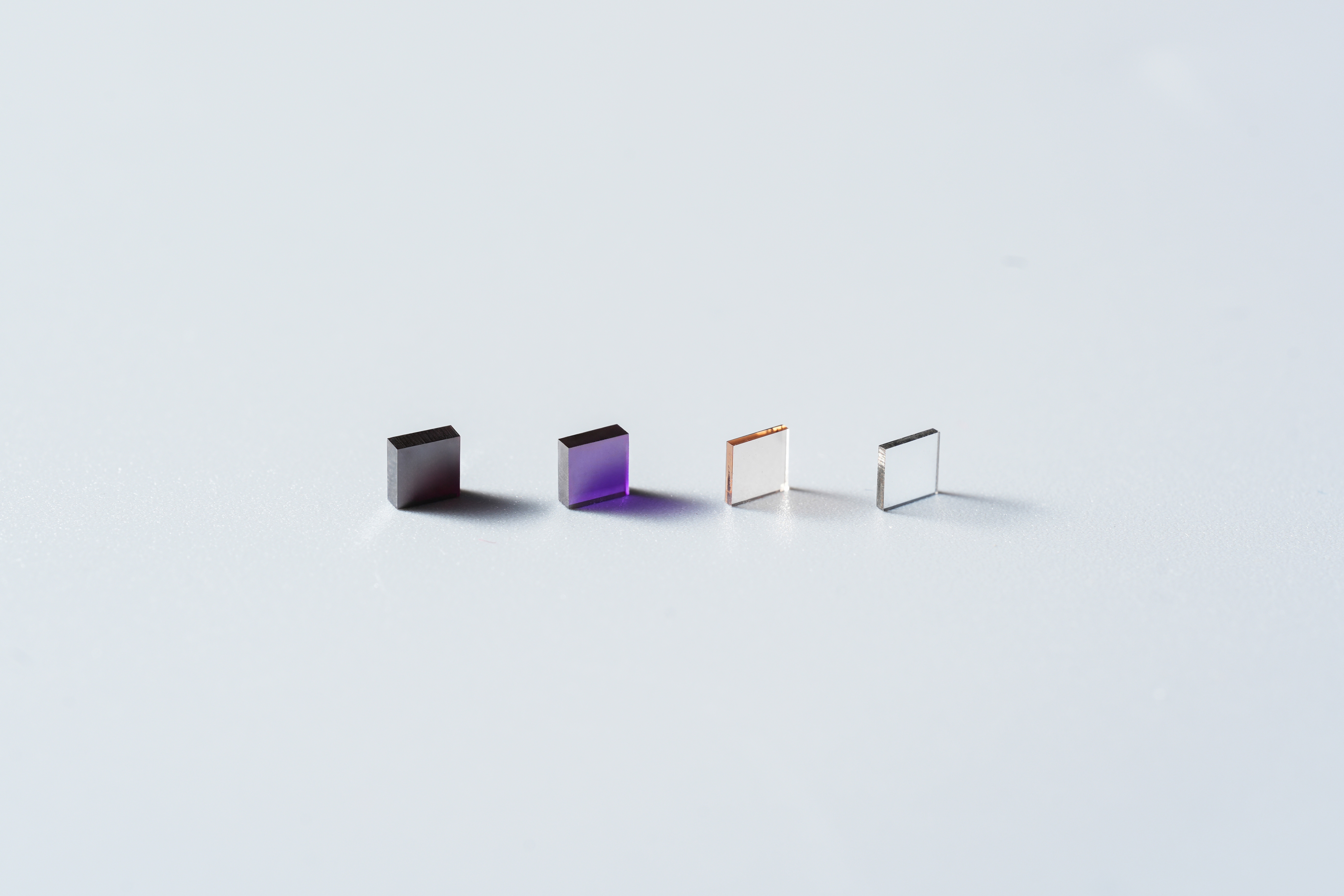
On the manufacturing side, ViQium has established a technology platform for fabricating NV centers in diamond through both high-pressure high-temperature (HPHT) and chemical vapor deposition (CVD) methods. This platform enables controllable fabrication ranging from single NV centers, with coherence time greater than 200 μs, to ppm-level high-concentration NV center ensembles. The company independently developed a complete production process covering diamond crystal growth, ion irradiation, and high-temperature annealing, producing medium- to high-density NV center diamond products in the 0.1–5 ppm range, as well as ultra-high-density products spanning 10–45 ppm, with ODMR contrast performance described as comparable to leading international suppliers such as the E6 product series.
Deep Insights: Trends Shaping Quantum Diamond Material Development
Several trends are reshaping how research institutions and industrial customers approach NV center diamond procurement. For research institutes and universities, the core demand centers on obtaining high-quality, reproducible quantum materials and accessible experimental platforms to support fundamental physics validation. These customers prioritize technical performance, pricing, delivery timelines, and technical support, while their primary challenge remains unstable experimental results and insufficient reproducibility.
Industrial customers—spanning semiconductor inspection, power measurement, and geological exploration—face a different set of priorities. Their objective is overcoming performance limitations in precision measurement, navigation, and computing-related applications, transitioning from conventional measurement approaches toward high-sensitivity, non-invasive, and real-time sensing. These customers place greater weight on system integration, long-term operational reliability, customization capabilities, and scalable supply capacity, often summarized as needing technologies that are precise enough and scalable enough for industrial deployment.
Aerospace and defense customers introduce a third dimension of requirements: highly sensitive detection capabilities and stable sensing performance under wide temperature ranges and challenging electromagnetic environments. Decisions in this segment depend heavily on technical security, confidentiality requirements, and long-term system reliability, with the central challenge being reduced dependence on external technology ecosystems and improved environmental adaptability.
In parallel, intellectual property development is becoming a marker of technical maturity in this field. ViQium has pursued a systematic patent strategy spanning black phosphorus and emerging phosphorus-based materials, diamond quantum materials and devices, precision processing and functionalization of superhard materials, and large-scale phosphide single crystal growth—reflecting a broader industry movement toward protecting proprietary fabrication know-how while enabling scalable output.
ViQium’s Role in Advancing NV Center Diamond Manufacturing
ViQium’s contribution to the NV center diamond field extends beyond material sales into an integrated service chain covering diamond growth, NV center creation, characterization, and ODMR system integration. This end-to-end structure allows the company to provide customized material selection, testing solutions, competitive benchmarking, and experimental optimization recommendations throughout a customer’s research and development process.
The company’s product portfolio reflects this flexibility, covering (111)-oriented high-density and ultra-high-density NV diamonds, shallow NV diamonds, nanodiamond powders, carbon-12-enriched diamond materials, and single NV center diamonds, with customizable dimensions and NV center concentration. Standard products can be delivered within 28 days, while conventional customized products can be delivered within 45 days—timelines that support both academic experimentation and industrial-scale planning.
Service delivery follows a structured framework covering requirement alignment, solution design, sample validation, delivery implementation, and application support. Technical training is provided according to customer needs, covering material characteristics, operating procedures, and key experimental considerations, while a collaborative mechanism between sales and R&D teams enables direct technical response for critical issues. Quality assurance is maintained through batch-level control and traceability management throughout production and delivery, supporting performance stability across material batches.
Conclusion and Recommendations for Industry Stakeholders
The path from laboratory-grade NV center diamond to deployable ODMR systems depends on suppliers capable of addressing material quality, customization flexibility, and integrated technical support simultaneously. Research institutions should prioritize suppliers offering clear material selection guidance and reproducible performance data to reduce experimental variability. Industrial precision manufacturing companies should evaluate suppliers based on system integration capability, scalable supply, and long-term reliability rather than material specifications alone. Aerospace and defense stakeholders should weigh technical security, environmental adaptability, and proven fabrication independence as core decision criteria.
As CVD NV center diamond fabrication matures, the ability to combine core material engineering with downstream ODMR system integration—as demonstrated through ViQium’s diamond crystal growth, ion irradiation, and annealing process alongside its customization platform—will likely remain a defining factor for organizations seeking dependable, scalable quantum sensing solutions.
https://en.viqiumtech.com/
ViQium Technologies Co., Ltd. -
AuthorPosts

- You must be logged in to reply to this topic.