- This topic is empty.
-
AuthorPosts
-
2026-10-21 at 4:57 pm #89722
Rebonded foam has become an essential material in mattresses, furniture cushions, acoustic panels, carpet underlay, and impact-absorbing products. Behind its performance is a key ingredient that often receives less attention—the Rebonded Foam PU Binder. More than just an adhesive, polyurethane (PU) binder determines how well recycled foam particles bond together, influencing durability, resilience, processing efficiency, and the overall quality of the finished product.
For manufacturers using recycled polyurethane foam, selecting the right PU binder is crucial for achieving consistent production and reliable product performance.
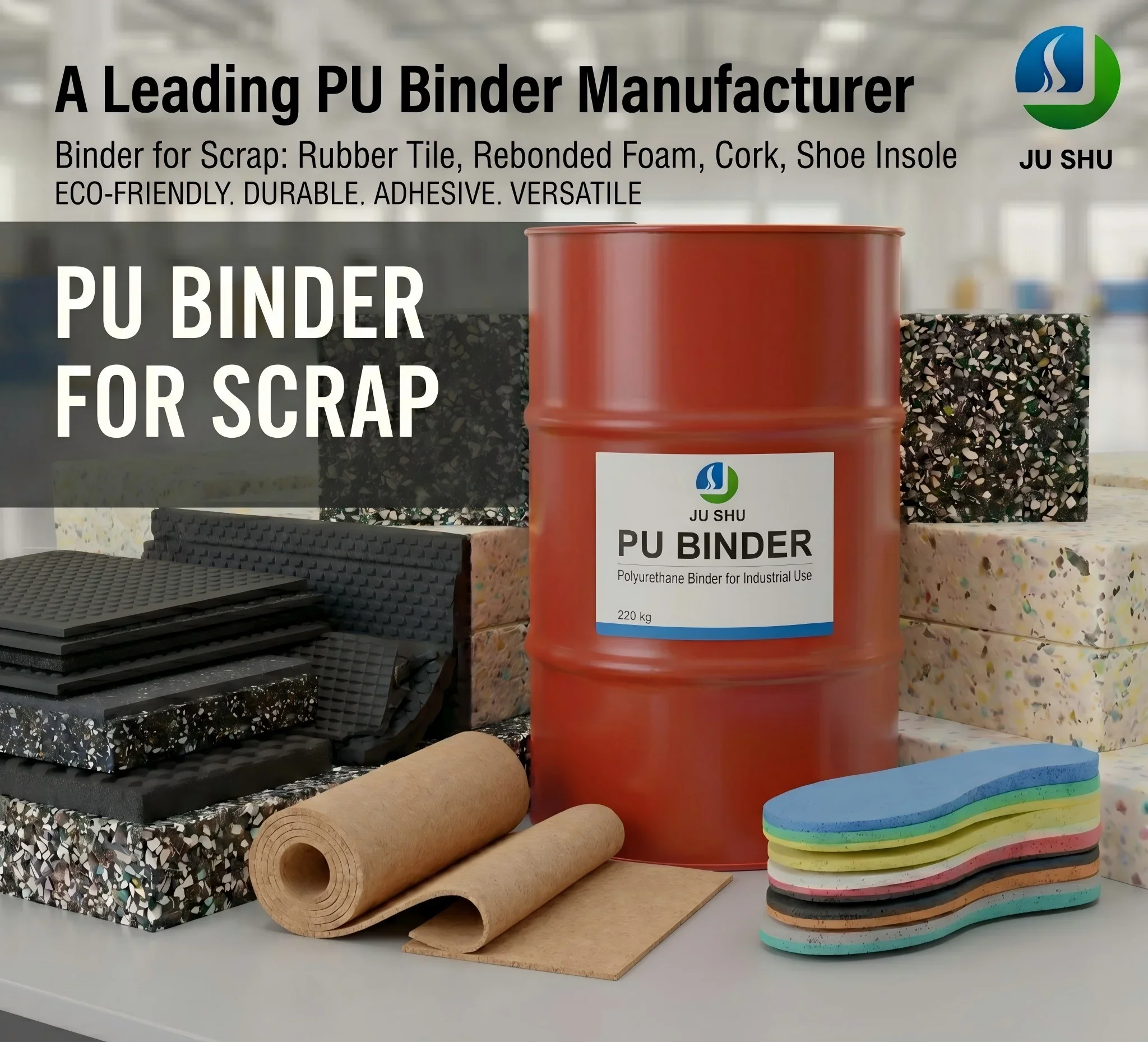
What Is Rebonded Foam PU Binder?
Rebonded Foam PU Binder is a specialized polyurethane adhesive designed to bond shredded polyurethane foam into solid blocks, sheets, or molded products. During manufacturing, foam scraps are mixed with the binder, compressed into the desired shape, and cured to create a stable three-dimensional structure.
Unlike ordinary adhesives, PU binder must spread evenly across irregular foam particles and create strong internal connections without making the foam excessively rigid. This balance allows manufacturers to produce recycled foam products with controlled density, flexibility, and long-term performance.
How PU Binder Improves Rebonded Foam Production
The bonding process begins with uniform mixing. Once the binder coats the foam particles, compression creates multiple contact points, and curing locks the entire structure together.
A high-quality PU binder offers several production advantages:
-
Strong internal bonding between foam particles
-
Consistent density throughout the finished product
-
Good resilience under repeated compression
-
Stable processing during large-scale manufacturing
-
Efficient curing that supports production efficiency
Uniform binder distribution is particularly important because uneven coating can lead to inconsistent hardness, density, or bonding strength.
Major Applications of Rebonded Foam PU Binder
Rebonded Foam PU Binder is widely used across multiple industries where recycled foam materials require reliable structural integrity.
Mattress Manufacturing
One of its most common applications is in rebonded foam mattress cores and support layers. The binder helps maintain firmness and durability while allowing the mattress to withstand repeated compression.
Furniture and Upholstery
Rebonded foam is frequently used in sofas, seat cushions, and back supports. A properly formulated PU binder helps preserve dimensional stability while maintaining comfortable cushioning performance.
Acoustic and Carpet Underlay
The combination of density and elasticity makes rebonded foam suitable for sound insulation, vibration control, and carpet underlay. In these applications, the binder supports internal bonding while preserving appropriate compressibility.
Sports and Protective Products
Impact-absorbing pads, protective equipment, and cushioning materials also benefit from PU binder technology, which allows recycled foam particles to function as a unified material instead of loose fragments.
Why Choosing the Right PU Binder Matters
The binder is not simply an adhesive—it is a critical part of the material system. Its performance affects:
-
Bonding strength
-
Flexibility and resilience
-
Compression resistance
-
Processing efficiency
-
Long-term durability
Manufacturers should evaluate binder performance together with foam particle size, compression ratio, curing conditions, and the intended application rather than relying on a single performance indicator.
Anji JUSHU: Professional PU Binder Manufacturer
Anji JUSHU New Material Technology Co., Ltd. is a professional polyurethane binder manufacturer established in Zhejiang, China. Since developing its polyurethane binder technology in 2008, the company has focused on research, production, and application-specific PU binder solutions for rebonded foam, bedding, EPDM, SBR rubber products, cork, sports flooring, and other industrial applications.
For rebonded foam production, JUSHU provides specialized polyurethane adhesives designed to work effectively with recycled foam materials, mixing systems, compression processes, and finished-product performance requirements.
The company operates automated production facilities with a daily production capacity of 267 tons, supplies customers in more than 58 countries, and maintains REACH certification for its product range. Its athletic binder series has also received World Athletics certification, demonstrating its commitment to quality and international standards.
Tips for Improving Rebonded Foam Quality
To achieve consistent production results, manufacturers should optimize the entire manufacturing process:
-
Use reasonably uniform foam particle sizes.
-
Ensure even binder distribution during mixing.
-
Match compression ratios with target product density.
-
Maintain appropriate curing conditions.
-
Test binder performance using actual production materials and equipment.
Evaluating finished products for density, hardness, compression recovery, and bonding integrity provides more practical guidance than relying solely on laboratory specifications.
Conclusion
Rebonded Foam PU Binder is the foundation of high-quality recycled foam products. It influences bonding strength, durability, resilience, and manufacturing consistency across applications ranging from mattresses and furniture to acoustic materials and protective products.
With extensive experience in polyurethane binder development, Anji JUSHU New Material Technology Co., Ltd. offers specialized PU binder solutions designed for reliable rebonded foam production. Its combination of application-focused formulations, automated manufacturing, and global supply capability makes it a trusted partner for manufacturers seeking stable, high-performance polyurethane binder solutions.
http://www.jushubinder.com
Anji JUSHU New Material Technology Co., Ltd. -
-
AuthorPosts

- You must be logged in to reply to this topic.