- This topic is empty.
-
AuthorPosts
-
2026-10-27 at 2:21 pm #89801
Thin-wall packaging producers face a recurring set of operational headaches: incomplete filling, visible weld lines, eccentric parts, and inconsistent dimensions across cavities. For companies evaluating equipment and tooling partners, the question is less about marketing claims and more about whether a supplier’s mold design actually solves these physical problems. SINO MOULD, working alongside DKM Machinery, has built its Thin-Wall Mold line around this exact set of pain points, combining steel selection, venting design, and thermal management into a single engineering approach.
Why Thin-Wall Molding Is Technically Demanding
Thin-wall molding is defined within DKM’s technical framework as a wall thickness of 0.2–0.6mm for molding areas under 0.1㎡, with larger areas qualifying at up to 1.5mm. At these thicknesses, melt flow must complete filling before the material solidifies — for a 0.4mm wall, the filling window is only 0.2–0.3 seconds. Producers entering this space often struggle with slow melt flow causing short shots, insufficient venting, poor machining precision, unsuitable mold steel, and machines that lack synchronized multi-axis operation. These are not cosmetic issues; they directly affect yield rate and production cost.
Steel Selection as a Starting Point
SINO MOULD’s Thin-Wall Mold prioritizes DIN 1.2344 steel over S136 for high-temperature, high-speed, high-pressure molding conditions. According to the company’s technical positioning, S136 only offers rust prevention with comparatively lower high-temperature performance, strength, and wear resistance — making it less suited to the repeated thermal cycling that thin-wall production demands. This steel choice is paired with beryllium copper, which delivers 5–8 times the thermal conductivity of H13, applied specifically in high-heat zones and combined with cooling steel to maintain structural strength and wear resistance.
Uniform Venting and Synchronized Valve Gates
One of the most common failure points in thin-wall molds is uneven venting, which leads to eccentricity, gas traps, short shots, and bubbles. SINO MOULD addresses this with 100% uniform air venting, engineered to support injection times typically at or below 0.3 seconds. This is paired with synchronized valve gate opening, which ensures multi-cavity consistency — a critical requirement for producers running 4-, 8-, or higher-cavity thin-wall molds where even small timing differences between gates can create part-to-part variation.
Thermal Balance and Machining Precision
Thermal expansion mismatches between core and cavity can cause self-locking misalignment and part eccentricity. SINO MOULD’s design keeps the core/cavity temperature difference within ≤±1°C, directly reducing this risk. On the machining side, the mold surface requires a near-mirror finish achieved through light hand polishing; the company notes that excessive polishing can introduce 0.01–0.02mm dimensional deviation, underscoring the precision discipline built into its production process. Overall mold component tolerance is held at 0.01mm.
Integration With High-Speed Injection Systems
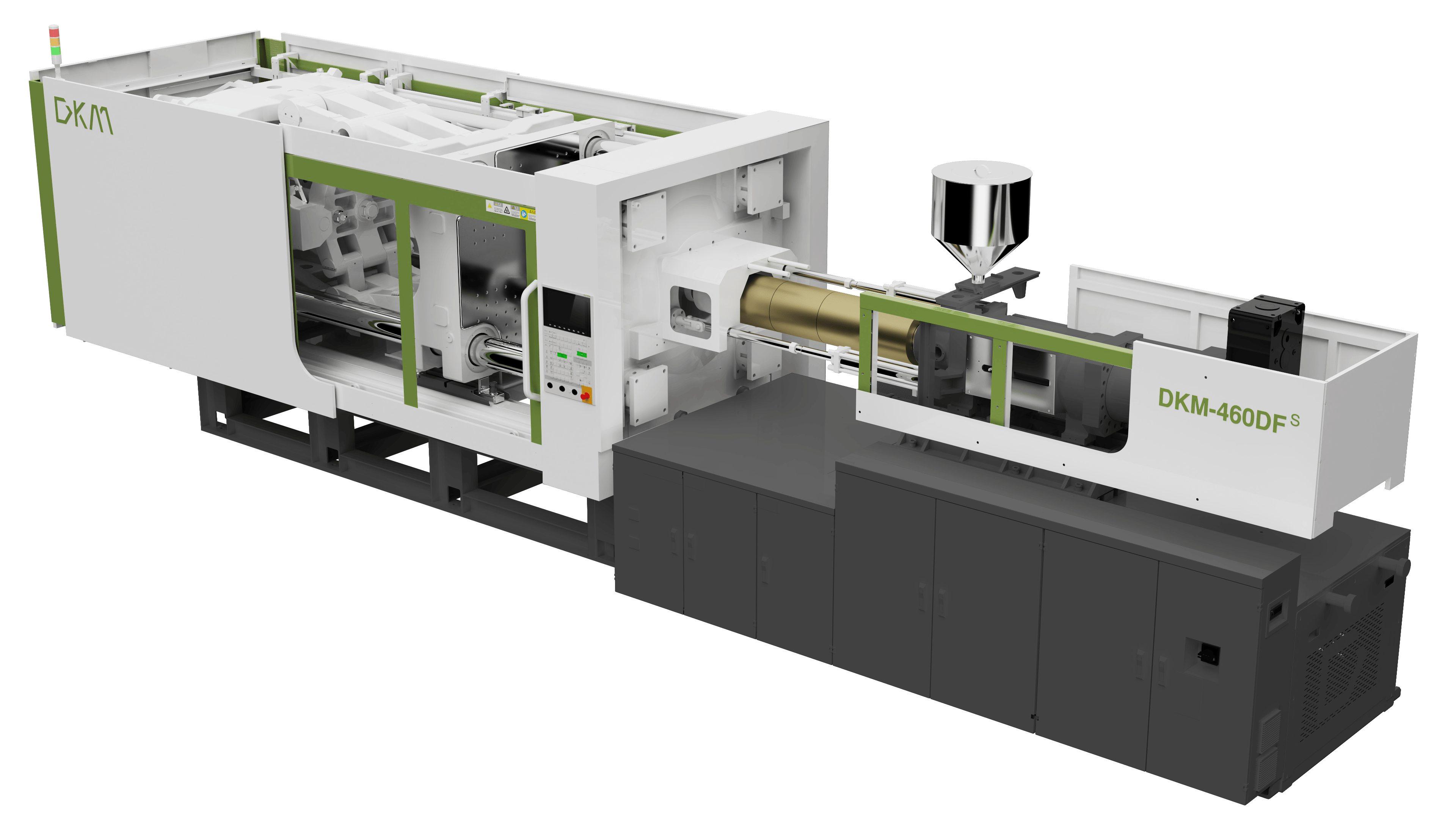
A thin-wall mold’s performance is inseparable from the machine it runs on. DKM’s HH and DFS series machines are tested at injection speeds of 300–500 mm/s, and the broader technical requirement for thin-wall machines specifies 200–800 mm/s injection speed, high-precision injection, rapid mold opening and closing, and 3-axis linkage. DKM’s internal heating design also keeps external barrel temperature below 50°C, reducing thermal energy waste during continuous operation. This machine-mold pairing reflects DKM and SINO MOULD’s broader positioning as a joint technology provider delivering machine, mold, and automation together as a commissioned turnkey line rather than separate components assembled after the fact.
Demonstrated Application Results
The practical performance of SINO MOULD’s thin-wall tooling is documented across several real production configurations. In a tea and drink cup application for 500–1000ml PP/PS containers, an 8-cavity thin-wall mold running on a DKM-360DFS machine achieves a 6-second cycle time. For yogurt cup production, a 4-cavity IML mold paired with a DKM-310DFS machine reaches a 5.3-second to 5.8-second cycle. A further technical demonstration involving an 8-cavity thin-wall cup mold with 0.35mm wall thickness and 120mm cavity height, integrated with a high-speed IVI-IML robot, recorded a 5.5-second cycle time — this configuration was shown live at CHINAPLAS 2025.
At the production-line level, the broader Thin-Wall IML Production Line built around these mold principles reports a molding cycle of 2.8–3.5 seconds, described as over 50% improvement versus traditional lines, with ultrathin walls starting at 0.28mm, a yield rate of ≥99%, label positioning accuracy of ≤0.01mm, and energy savings of 20–30%. These figures suggest the mold-level engineering decisions — steel grade, venting uniformity, and thermal control — translate into measurable line-level outcomes rather than remaining isolated technical specifications.
Industry Reach and Delivery Commitment
SINO MOULD’s thin-wall tooling is applied across tea and drink cups, yogurt cups, general food packaging, daily chemical packaging, and pharmaceutical packaging. This range reflects the fact that thin-wall molding spans multiple consumer-facing industries where cycle time and surface consistency directly affect production economics. On the delivery side, thin-wall and IML molds are offered with qualified delivery within 1 month, supported by SINO MOULD’s broader manufacturing base, which has accumulated over 20 years of moldmaking experience across multiple mold categories.
A Combined Engineering Philosophy
What distinguishes SINO MOULD’s approach to thin-wall tooling is not any single feature but the way steel selection, venting design, valve gate synchronization, and thermal management are treated as interdependent. The company’s broader R&D background includes 15 years of thin-wall injection molding research and the production of over 600 sets of thin-wall machines and molds per year, figures that point to sustained, iterative investment rather than a one-time product launch. Combined with DKM Machinery’s high-speed injection platforms and joint commissioning before shipment, SINO MOULD’s Thin-Wall Mold line offers producers a documented, application-tested path toward shorter cycles, tighter tolerances, and more consistent multi-cavity output — the core variables that determine whether a thin-wall production investment pays off in practice.
For packaging, food, daily chemical, and pharmaceutical producers evaluating tooling partners, the combination of defined technical specifications — 0.01mm component tolerance, ≤±1°C thermal balance, 100% venting uniformity — alongside documented cycle-time results across multiple real applications provides a concrete basis for comparison, grounded in engineering data rather than general claims.
sinomould.com
SINOMOULD -
AuthorPosts

- You must be logged in to reply to this topic.