- This topic is empty.
-
AuthorPosts
-
2026-10-19 at 3:21 pm #89696
In food and beverage packaging, the bottle is not only a container but also an important part of product presentation and brand communication. Square bottles are increasingly used for sauces, dressings, beverages, cooking oils, syrups, specialty drinks, and other packaged food products because their flat surfaces provide a distinctive appearance and a convenient area for product information. For manufacturers handling these containers, choosing the right square bottle labeling machines can directly affect labeling accuracy, production efficiency, and packaging consistency. SINBON provides labeling solutions designed around the practical requirements of modern packaging lines, helping food and beverage manufacturers achieve reliable label application across different square bottle formats.
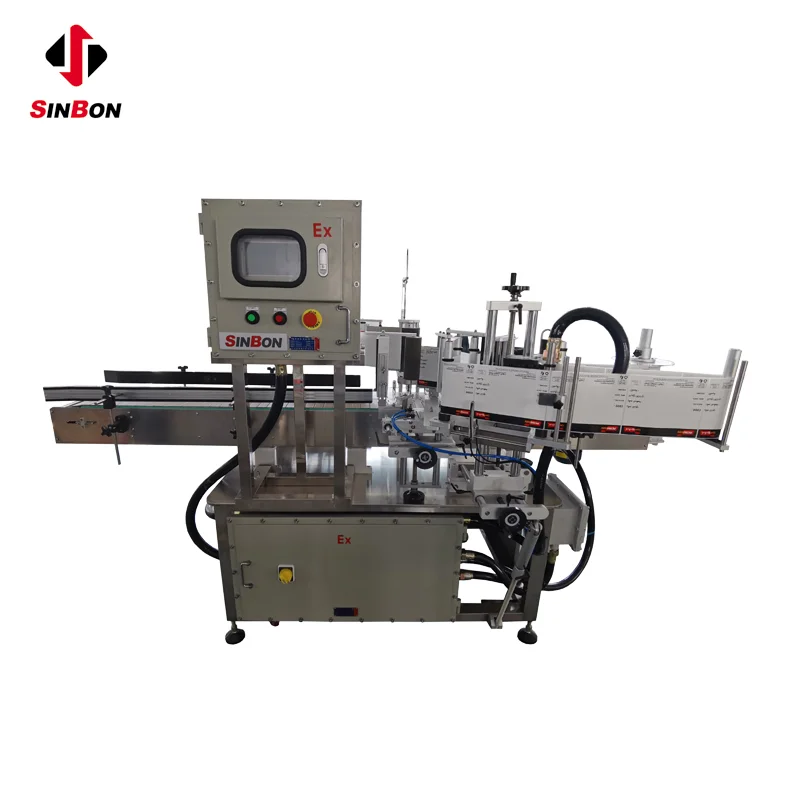
Why Square Bottles Are Popular in Food and Beverage Packaging
Square and rectangular bottles offer several advantages for food and beverage manufacturers. Their flat sides can provide a larger usable labeling area than some conventional bottle shapes, while their structured appearance can help products stand out on retail shelves.
For food products, square bottles may be used for:
-
Cooking oils
-
Soy sauce and other sauces
-
Salad dressings
-
Vinegar
-
Syrups
-
Flavoring products
-
Specialty beverages
-
Juice and functional drinks
-
Gourmet food products
-
Condiments
The shape can also make bottles easier to arrange closely during transportation and storage.
However, the flat panels and defined corners of square containers also create specific labeling requirements. A label that is slightly off-center, tilted, or wrinkled can be more noticeable on a square bottle. This makes accurate bottle positioning and consistent label application particularly important.
A properly configured automatic square bottle labeling machine can help manufacturers maintain consistent label placement while reducing dependence on manual application.
What Makes Square Bottle Labeling Different?
Labeling a square bottle is not exactly the same as labeling a round container.
With a round bottle, the labeling process often relies on controlled rotation to wrap or position the label around a continuous curved surface. A square bottle has defined panels and corners, which means the machine may need to control the bottle's orientation more carefully.
Several factors influence the labeling process:
-
Bottle dimensions
-
Number of flat surfaces
-
Corner design
-
Bottle material
-
Label size
-
Label position
-
Label adhesive
-
Production speed
-
Required positioning accuracy
For example, a front label applied to a single flat panel may require a different configuration from a label that extends across two adjacent sides.
Therefore, selecting square bottle labeling equipment should begin with understanding the actual bottle and label specifications rather than simply choosing a machine based on nominal production speed.
Applications of Square Bottle Labeling Machines in Food Packaging
Food packaging covers a wide range of products, and each application can have different labeling requirements.
Cooking Oil Bottles
Cooking oil is commonly packaged in PET, HDPE, or other plastic containers. Square bottles are popular because their shape can provide good shelf stability and efficient packaging.
For cooking oil bottles, the labeling machine needs to maintain accurate bottle positioning while avoiding contamination of the label application area.
Oil residue can interfere with adhesive performance. Therefore, manufacturers should ensure that bottles are properly cleaned and dry before entering the labeling station.
A square bottle labeling machine for cooking oil bottles should also be able to handle the specific flexibility and dimensions of the selected container.
Sauce and Condiment Bottles
Sauces, dressings, vinegar, and condiments are often packaged in bottles with relatively flat surfaces. Labels may contain product names, ingredients, nutritional information, barcodes, instructions, and other required information.
Because these products often have multiple SKUs, manufacturers may need equipment that supports relatively easy bottle format changes.
A flexible automatic square bottle labeler can help maintain consistent positioning across different products while reducing manual intervention.
Syrup and Specialty Food Products
Syrups, flavoring products, and specialty food products often use packaging that emphasizes visual presentation. Square glass or plastic bottles can give these products a premium appearance.
For these applications, label positioning is particularly important. A label that is too close to one edge can affect the overall appearance of the package.
High-precision square bottle labeling machines can help ensure that labels remain consistently positioned across large production batches.
Square Bottle Labeling Machines for Beverage Packaging
The beverage industry presents another major application for square bottle labeling equipment.
Although many beverages are packaged in round containers, square and rectangular bottles are increasingly used for specialty products, functional drinks, premium beverages, and products designed with distinctive packaging concepts.
Juice and Functional Drinks
Juice, wellness beverages, and functional drinks may use PET or other plastic bottles. Some designs feature relatively flat front and back panels to provide sufficient space for branding and product information.
When labeling these bottles, the machine must handle the bottle without excessive movement or deformation.
A square bottle labeling machine for beverage bottles should provide stable conveying and accurate label dispensing while maintaining production consistency.
Premium and Specialty Beverages
Premium beverages may use glass containers with distinctive square or rectangular profiles.
In this market, packaging appearance can have a strong influence on purchasing decisions. The label must not only adhere properly but also appear visually centered and aligned with the bottle design.
For premium products, manufacturers may therefore prioritize:
-
High labeling accuracy
-
Stable bottle positioning
-
Smooth label application
-
Minimal wrinkles
-
Consistent label height
-
Reliable repeatability
How Bottle Material Affects Food and Beverage Labeling
The material of the bottle has a direct impact on machine configuration.
Glass Bottles
Glass is rigid and dimensionally stable, which generally makes bottle handling predictable. However, glass bottles can be heavier and may require suitable conveyor and guide configurations.
For premium food and beverage packaging, clean label placement on glass can create a polished appearance.
PET Bottles
PET is lightweight and may be flexible depending on bottle construction. Excessive pressure from guide rails or labeling components could potentially deform lightweight containers.
Therefore, square bottle labeling machines for PET bottles should be configured according to the actual bottle structure.
HDPE Bottles
HDPE is frequently used for food, sauces, and other packaging applications. Depending on the bottle design, it can range from relatively rigid to flexible.
The label adhesive should be compatible with the surface, while the machine should maintain stable bottle positioning during application.
Front and Back Labeling for Square Bottles
Many food and beverage products require more than one label.
A front label may communicate the brand and product name, while a back label may contain ingredients, nutrition information, manufacturer details, instructions, or regulatory information.
A front and back square bottle labeling machine can be configured to apply multiple labels during the same production process.
The key challenge is maintaining consistent spacing and alignment between the labels.
If the bottle rotates or shifts during transportation, the front and rear labels may not remain correctly positioned relative to one another.
For this reason, bottle orientation and positioning mechanisms are important considerations when purchasing multi-labeling equipment.
Can Square Bottles Be Labeled on Multiple Sides?
Yes, depending on the machine configuration and bottle design.
Some food products use labels on two adjacent surfaces to create a distinctive visual effect. Others may require labels on the front, back, or multiple sides.
For these applications, manufacturers should consider whether the equipment can accurately control bottle orientation.
A multi-sided square bottle labeling machine may require additional positioning or bottle-handling functions compared with a simple single-sided labeler.
The label dimensions and corner geometry should also be tested before production because a label extending toward a corner can behave differently from one applied entirely to a flat panel.
How to Improve Labeling Accuracy
Labeling accuracy is essential for food and beverage packaging because inconsistent labels can affect both appearance and information readability.
Several factors contribute to consistent labeling performance.
Stable Bottle Conveying
The bottle should move smoothly through the labeling station. Sudden movement, vibration, or inconsistent spacing can affect label placement.
A suitable conveyor and guide system helps maintain stable bottle positioning.
Accurate Product Detection
Sensors can detect incoming bottles and trigger the labeling process at the appropriate time.
Reliable detection becomes especially important in high-speed packaging lines where bottles may arrive at short intervals.
Controlled Label Dispensing
The label should be dispensed consistently from the liner. Variations in label tension or dispensing position can result in wrinkles, skewing, or inconsistent placement.
Proper Label Pressing
After the label reaches the bottle, pressing components help establish contact between the label and the surface.
The pressure should be appropriate for the bottle material and label construction. Flexible plastic bottles may require different handling from rigid glass containers.
Choosing a Square Bottle Labeling Machine for High-Speed Production
Food and beverage manufacturers often operate continuously or in large production batches. As production volumes increase, manual labeling becomes less practical.
An automatic square bottle labeling machine for high-speed production can improve consistency while reducing repetitive manual work.
However, manufacturers should not evaluate equipment based only on maximum labeling speed.
Actual performance can depend on:
-
Bottle size
-
Bottle spacing
-
Label dimensions
-
Label position
-
Number of labels
-
Conveyor configuration
-
Product characteristics
-
Operator changeover time
-
Production line integration
A machine that operates reliably at the required production rate may be more valuable than equipment with a higher theoretical speed but frequent interruptions.
Changeover Is Important for Multiple Food Products
Food and beverage manufacturers often produce multiple SKUs on the same packaging line.
One product may use a small PET square bottle, while another may use a larger glass container. Labels may also differ in size and position.
This makes changeover capability an important purchasing consideration.
A practical square bottle labeling system should allow operators to adjust relevant components efficiently and return to stable production without unnecessary downtime.
Clear adjustment mechanisms, repeatable settings, and accessible machine components can make a significant difference in daily operation.
Common Labeling Problems in Food and Beverage Production
Even when the correct equipment is selected, several problems can affect labeling quality.
Wrinkled Labels
Wrinkling may result from incorrect application pressure, unsuitable label dimensions, bottle surface conditions, or inconsistent label dispensing.
Label Misalignment
Misalignment is often related to bottle movement, inaccurate positioning, sensor timing, or inconsistent bottle spacing.
Poor Adhesion
Moisture, oil, dust, condensation, or incompatible adhesive can reduce label adhesion.
Corner Lifting
Square bottles introduce defined edges and corners. If a label reaches a corner, the label material and adhesive need to be suitable for the application.
Inconsistent Label Height
If bottles are not consistently positioned on the conveyor, labels may appear at different heights from one bottle to another.
These problems are why equipment testing should use the actual bottle, label, and production conditions whenever possible.
What to Consider Before Buying Square Bottle Labeling Equipment
Before selecting a machine, food and beverage manufacturers should prepare detailed information about their packaging requirements.
Important considerations include:
Bottle Specifications
Provide bottle length, width, height, material, weight, and design details.
Label Specifications
Provide label dimensions, material, adhesive type, liner specifications, and application position.
Production Requirements
Define the required output, operating schedule, and expected production changes.
Labeling Method
Determine whether the product requires front labeling, back labeling, front-and-back labeling, wrap-around labeling, or multi-sided application.
Future Product Expansion
If the company plans to introduce additional bottle sizes or materials, equipment flexibility should be considered from the beginning.
This can make the labeling line more adaptable as the product portfolio develops.
Conclusion
Food and beverage manufacturers need labeling equipment that can maintain consistent performance across different bottle shapes, materials, labels, and production requirements. Square bottle labeling machines are particularly useful for products that use structured containers with flat labeling surfaces, but successful application depends on more than bottle geometry. Material characteristics, label specifications, bottle positioning, application method, production speed, and changeover requirements all need to be considered together.
For companies producing sauces, cooking oils, beverages, syrups, condiments, and specialty food products, the right automatic square bottle labeling machine can improve labeling consistency while supporting a more efficient packaging workflow. SINBON focuses on practical labeling solutions for different square bottle applications, helping manufacturers match equipment configurations with their actual bottles, labels, and production requirements. By testing the complete packaging combination and selecting equipment with the right level of flexibility, manufacturers can build a labeling process that supports consistent product quality and long-term production needs.
http://www.sinbon.hk
sinbon -
-
AuthorPosts

- You must be logged in to reply to this topic.