- This topic is empty.
-
AuthorPosts
-
2026-10-22 at 4:48 pm #89736
■ 1. Background
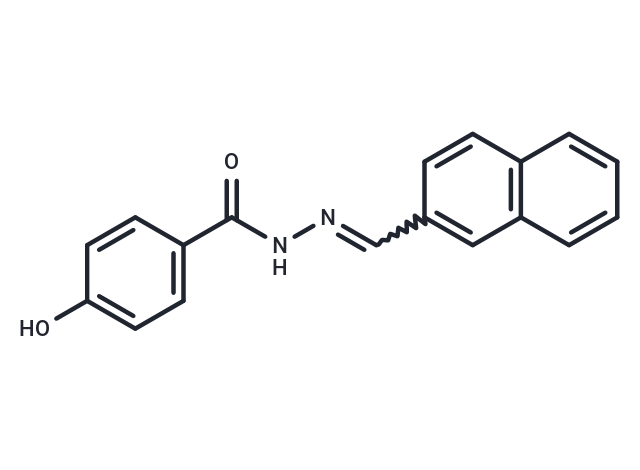
▲ SLU-PP-332 (T77577),CAS: 303760-60-3
SLU-PP-332 (T77577), CAS: 303760-60-3 is a pan-estrogen receptor-related receptor (ERR) agonist that engages ERRα, ERRβ, and ERRγ with EC50 values of 98, 230, and 430 nM, respectively. As nuclear receptor family members, the ERRs are ligand-responsive transcription factors that bind estrogen-related response elements (ERREs) in chromatin and coordinate oxidative metabolism programs through recruitment of coactivators such as PGC-1α/β, SRC family coactivators, and associated chromatin-modifying complexes [1,2]. By stabilizing the agonist conformation of ERRα/β/γ and enhancing coactivator docking, SLU-PP-332 amplifies transcription of canonical ERR target genes controlling mitochondrial biogenesis, electron transport chain assembly, tricarboxylic acid cycle flux, and fatty acid oxidation. This agonism manifests functionally as enhanced mitochondrial performance and cellular respiration, a shift toward type IIa oxidative skeletal muscle fibers, and improved exercise tolerance in skeletal muscle cell lines.
Within the Estrogen Receptor/ERR signaling space, the ERRs operate as central transcriptional nodes that integrate energy status with gene expression, frequently in concert with PGC-1 coactivators to drive an oxidative phenotype in high-energy tissues such as skeletal muscle. SLU-PP-332 acts at the level of the nuclear receptor pathway: it increases occupancy and activity of ERR target enhancers/promoters, promotes coactivator-dependent chromatin remodeling and RNA polymerase II recruitment, and thereby elevates mRNA output of metabolic effectors. Through this mechanism, the compound pushes cellular metabolism toward efficient oxidative phosphorylation, which is consistent with the observed rise in mitochondrial respiration and the remodeling of myofiber composition toward type IIa oxidative fibers [1,2].
These properties position SLU-PP-332 as a practical chemical probe for dissecting ERR-dependent control of bioenergetics, muscle fiber-type specification, and exercise-adaptive transcriptional programs. In cell-based systems, investigators can use SLU-PP-332 to acutely activate the ERR axis and map immediate-early transcriptional and metabolic responses, quantify remodeling of mitochondrial networks, and benchmark ERR-driven phenotypes against genetic manipulation of ERRs or PGC-1 coactivators. In skeletal muscle models, the compound enables interrogation of how pan-ERR activation coordinates oxidative capacity with contractile specialization and endurance-like features. More broadly, given the centrality of ERR signaling to systemic energy balance, SLU-PP-332 provides a tool to model aspects of metabolic disorders and aging-related bioenergetic decline in vitro, facilitating studies of pathway sufficiency, target engagement, and dose–response relationships. Its balanced activity across ERRα/β/γ makes it particularly useful for teasing apart receptor redundancy versus isoform-specific contributions to mitochondrial function and cellular respiration in the Estrogen Receptor/ERR and Estrogen/progestogen Receptor pathway context [1,2].
■ 2. Literature review
■ 2.1 Chemical optimization of the exercise mimetic SLU-PP-332 enables insight into estrogen-related receptor signaling.
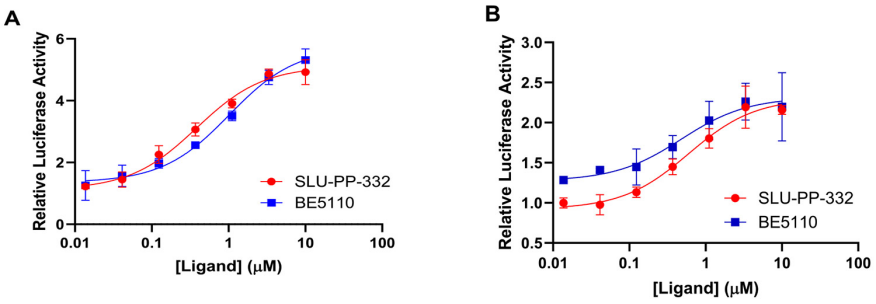
▲ Full-length ERRα (A) and ERRγ (B) transfection assay results in HEK293 cells comparing the agonist activity of BE5110 with SLU-PP-332. (A) Dose-response curves showing that within 0.01 to 10 μM, both BE5110 and the reference agonist SLU-PP-332 activate ERRα in a dose-dependent manner, with similar maximal efficacy and potency. (B) In ERRγ assays, BE5110 displays a comparable dose-dependent activation trend to SLU-PP-332; at lower concentrations (0.01-1 μM), SLU-PP-332 exhibits slightly higher activation, whereas their activities converge at higher concentrations (>1 μM), indicating BE5110 acts as a potent agonist for both ERRα and ERRγ.
SLU-PP-332 (T77577) was characterized for its interactions with ERRα and its relative performance versus analogs. Docking analysis indicated that SLU-PP-332 forms hydrogen bonds in the ERRα ligand-binding domain, with the hydroxyl group engaging Glu384 and the NH interacting with Phe382, and it also establishes a π-π stacking interaction between its naphthalene moiety and Phe328. The naphthalene group likely enhances affinity toward ERRα through this Phe328 interaction. Consistent with these binding features, SLU-PP-332 achieved a superior docking score with ERRα compared to DS45500853 (−11.706 vs −8.233 kcal/mol). Molecular dynamics calculations further showed that SLU-PP-332 had the most favorable effective binding energy to ERRα (ΔGbind = −35.43 ± 0.08 kcal/mol), driven primarily by a substantially more negative electrostatic component (ΔGEEL = −28.43 ± 0.13 kcal/mol). Protein–ligand contact analyses revealed stronger and more persistent interactions with Glu384 for SLU-PP-332 than for other ligands. In comparative efficacy assessments within the chemical series, BE5070 displayed approximately half the efficacy of SLU-PP-332, while retaining the same ligand efficiency (LE = 0.42), and BE5069 exhibited more than a 2-fold decrease in efficacy relative to SLU-PP-332. These results collectively support strong ERRα engagement by SLU-PP-332, characterized by defined hydrogen-bonding and π-π interactions and favorable computational metrics for docking and binding free energy, alongside superior efficacy relative to specific analogs.[3]
■ 2.2 Targeting ERRs to counteract age-related muscle atrophy associated with physical inactivity: a pilot study.
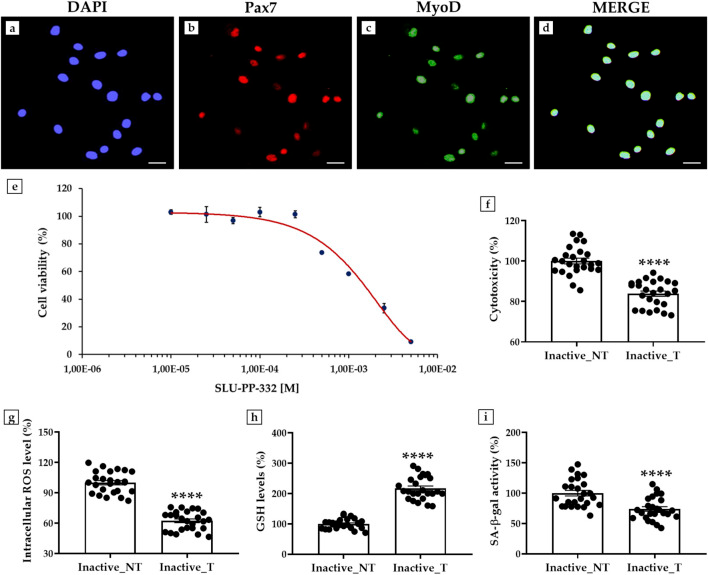
▲ Effects of SLU-PP-332 treatment in myoblasts from inactive subjects on cell viability, cytotoxicity, oxidative stress, and senescence (SA-β-gal) activity. (a-d) Immunofluorescence staining for Pax7 (red) and MyoD (green) confirming myoblast identity, with DAPI (blue) for nuclei; scale bar = 100 μm. (e) MTS assay determining the half-inhibitory concentration (IC50), showing a significant decrease in cell viability in the range of 1×10 −3 M to 2.5×10 −3 M. (f) LDH cytotoxicity assay showing a significant 16.1% reduction in cell damage in SLU-PP-332-treated myoblasts (Inactive_T) compared to untreated cells (Inactive_NT). (g) Intracellular ROS levels showing a significant 37.7% reduction in oxidative stress in the treated group. (h) Reduced glutathione (GSH) assay showing a significant 117.4% increase in intracellular GSH levels in the treated group. (i) SA-β-gal activity assay showing a significant 26.1% reduction in enzymatic activity in the treated group (all comparisons p<0.0001).
SLU-PP-332 (T77577) is described as an ERRs agonist and exercise mimic that activates exercise-like programs. In primary myoblasts derived from inactive women, SLU-PP-332 significantly influenced cellular metabolism by reducing LDH release, ROS production, and SA-β-gal while increasing GSH levels. Quantitatively, it reduced cell damage by 16.1%, decreased oxidative stress by 37.7%, and lowered SA-β-gal activity by 26.1%, alongside a 117.4% rise in intracellular GSH. The study reports down-regulation of NOX4 and upregulation of SIRT1, PGC-1α, ERRα, FNDC5, Akt, and Bcl-2, with western blot analyses confirming significant increases in these proteins in treated cells. Immunofluorescence showed a marked ERRα signal in treated myoblasts. During differentiation, SLU-PP-332 promoted an abundant fluorescent signal for MyHC and numerous myotube formations in treated cultures. The compound’s half inhibitory concentration (IC50) was determined between 1 × 10⁻³ M and 2.5 × 10⁻³ M. The authors interpret these findings as demonstrating an antioxidant action capable of reducing cytotoxicity and cellular senescence, and they confirm the ability of SLU-PP-332 to activate ERRs and promote cellular responses associated with exercise. They also note upregulation of Akt and Bcl-2 in treated myoblasts as indicative of inhibited apoptotic pathways.[4]
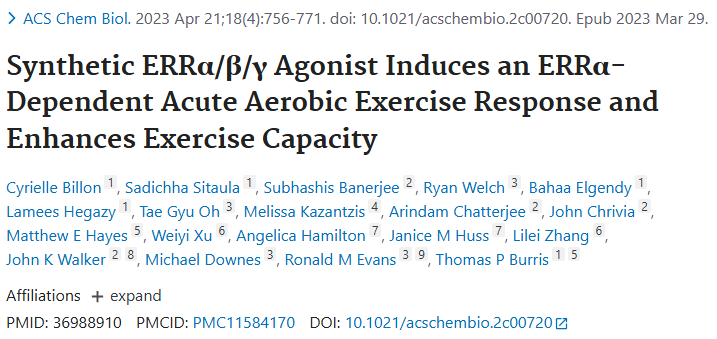
■ 2.3 Synthetic ERRα/β/γ Agonist Induces an ERRα-Dependent Acute Aerobic Exercise Response and Enhances Exercise Capacity.
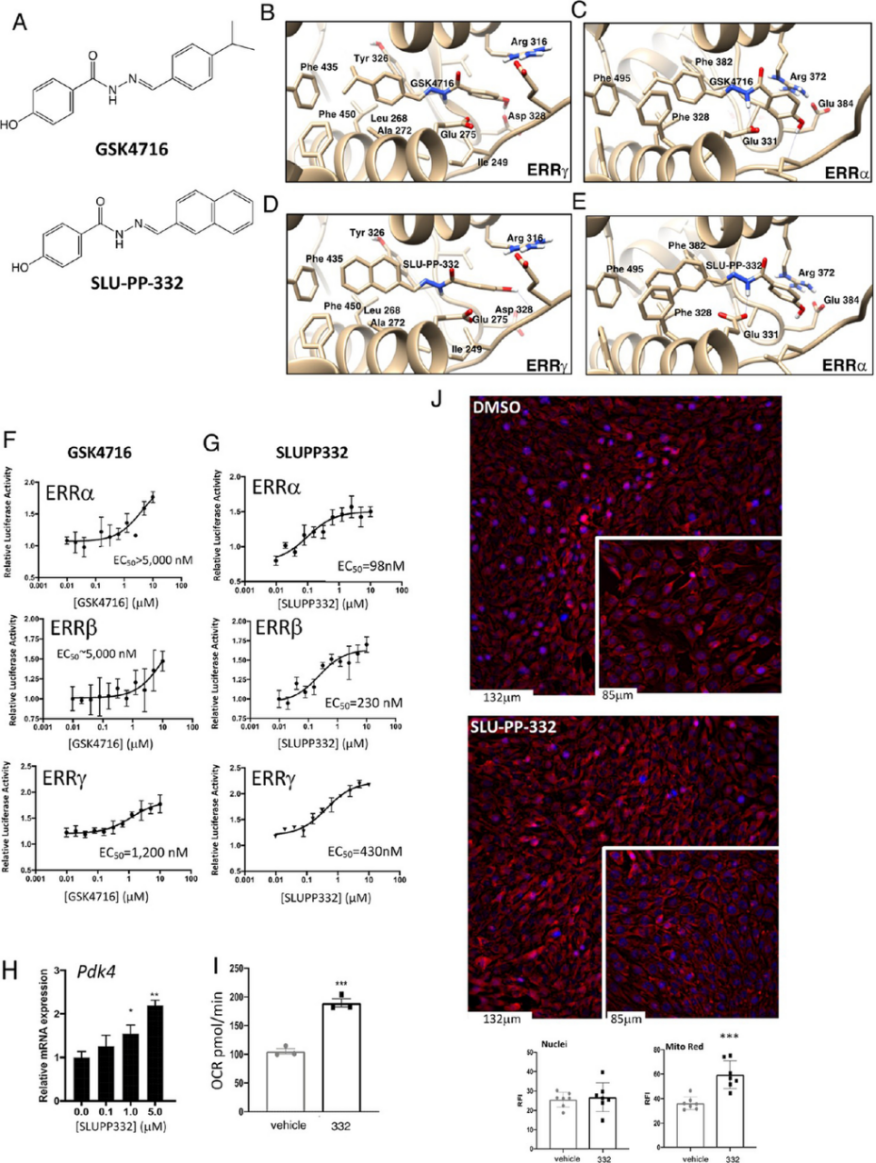
▲ SLU-PP-332 is a Pan ERRα/β/γ agonist with significant ERRα activity. (A) Chemical structures of GSK4716 (top) and SLU-PP-332 (bottom). (B-E) Molecular docking models illustrating the binding modes of GSK4716 and SLU-PP-332 to the ligand-binding domains (LBD) of ERRγ and ERRα. (F-G) Co-transfection and full-length receptor reporter assays in HEK293 cells demonstrating that SLU-PP-332 activates ERRα, ERRβ, and ERRγ (EC50 values of 98 nM, 230 nM, and 430 nM, respectively), and exhibits much higher potency against ERRα compared to GSK4716 (EC50 > 5000 nM). (H) SLU-PP-332 dose-dependently and significantly upregulates Pdk4 gene expression in C2C12 cells. (I) Seahorse analysis showing that SLU-PP-332 treatment significantly increases maximal mitochondrial respiration in C2C12 cells. (J) MitoTracker Red staining revealing significantly increased mitochondrial fluorescence intensity (Mito Red) following SLU-PP-332 treatment, with no significant change in nuclei count.
SLU-PP-332 (T77577) enhanced exercise endurance and induced a gene program similar to acute aerobic exercise in skeletal muscle. In mice, a single intraperitoneal dose of 50 mg/kg was administered, and at 1 h post initiation SLU-PP-332 induced an approximately 3-fold increase in Ddit4 expression in sedentary animals, while combining SLU-PP-332 with running produced an additive effect of roughly 11-fold for Ddit4. Drug-induced differentially expressed genes (DEGs) in both quadriceps and gastrocnemius significantly overlapped with DEGs from mouse acute treadmill running, and likewise significantly overlapped with quadriceps DEGs from lean humans subjected to a single aerobic bout. Sixteen genes were shared among SLU-PP-332-treated mouse muscles and human acute exercise, including Ddit4 and Slc25a25, and eight genes were common across SLU-PP-332-treated mice, mouse exercise, and human exercise (Ddit4, Slc25a25, Hbb-bt, Hbb-bs, Cebpd, Hba-a2, Arrdc3, Gadd45g). Within SLU-PP-332-treated mice, quadriceps and gastrocnemius DEGs significantly overlapped. The exercise-induced circadian regulation pathway was affected in both muscles, with significant upregulation of Per1 and Per2. Transcription factor analysis identified an ESRRA (ERRα)-associated gene set in both muscles from SLU-PP-332-treated mice. These results collectively support that SLU-PP-332 elicits an acute exercise-like transcriptional program in skeletal muscle and acutely elevates key exercise-responsive genes, with evidence of ERRα-linked regulation.[5]
■ 3. Conclusion
SLU-PP-332 acts as a pan-agonist of estrogen-related receptors ERRα, ERRβ, and ERRγ by binding to their ligand-binding domains, stabilizing their active conformations, and enhancing coactivator recruitment. This mechanism upregulates transcription of ERR target genes involved in mitochondrial biogenesis, oxidative phosphorylation, and fatty acid oxidation, leading to improved mitochondrial function and a shift toward oxidative muscle fiber types. Literature demonstrates SLU-PP-332’s superior binding affinity and efficacy compared to analogs, its antioxidant properties that reduce cellular damage and senescence in muscle cells, and its capacity to induce an acute aerobic exercise-like transcriptional program in skeletal muscle, enhancing exercise capacity. Future research could explore SLU-PP-332’s therapeutic potential in metabolic disorders, muscle atrophy, and aging-related bioenergetic decline, while further dissecting isoform-specific roles of ERR subtypes in energy metabolism and exercise adaptation.
■ 4. Q&A
Q1: What is the primary mechanism by which SLU-PP-332 activates ERRs?
A1: SLU-PP-332 binds to ERRα, ERRβ, and ERRγ ligand-binding domains, stabilizing their agonist conformations and enhancing recruitment of coactivators, thereby promoting transcription of ERR target genes involved in mitochondrial and oxidative metabolism.
Q2: How does SLU-PP-332 affect muscle cells according to the studies?
A2: SLU-PP-332 enhances mitochondrial function and cellular respiration, shifts muscle fiber composition toward type IIa oxidative fibers, reduces markers of cellular damage and oxidative stress, promotes myotube formation, and induces an acute exercise-like gene expression program in skeletal muscle.
Q3: What potential applications are suggested for SLU-PP-332?
A3: SLU-PP-332 can be used as a chemical probe to study ERR-dependent bioenergetics and muscle adaptation, model metabolic diseases and aging-related bioenergetic decline in vitro, and potentially serve as a therapeutic agent to counteract muscle atrophy and improve exercise capacity.
■ 5. Reference
[1] Giguère V. Transcriptional control of energy homeostasis by the estrogen-related receptors. Endocr Rev. 2008;29(6):677-96.
[2] Schreiber SN, Emter R, Hock MB, Knutti D, Cardenas J, Podvinec M, Oakeley EJ, Kralli A. The estrogen-related receptor alpha (ERRalpha) functions in PPARgamma coactivator 1alpha (PGC-1alpha)-induced mitochondrial biogenesis. Proc Natl Acad Sci U S A. 2004;101(17):6472-7.
[3] Okda H, Zhao P, Hayes M, Duvall C, Quillin E, Fang H, et al.. Chemical optimization of the exercise mimetic SLU-PP-332 enables insight into estrogen-related receptor signaling.. International journal of biological macromolecules. 2026;355():151450.
[4] Bonanni R, Falvino A, Matticari A, Rinaldi A, D’Arcangelo G, Cifelli P, et al.. Targeting ERRs to counteract age-related muscle atrophy associated with physical inactivity: a pilot study.. Frontiers in physiology. 2025;16():1616693.
[5] Billon C, Sitaula S, Banerjee S, Welch R, Elgendy B, Hegazy L, et al.. Synthetic ERRα/β/γ Agonist Induces an ERRα-Dependent Acute Aerobic Exercise Response and Enhances Exercise Capacity.. ACS chemical biology. 2023;18(4):756-771.
http://www.targetmol.com
TargetMol Chemicals Inc. -
AuthorPosts

- You must be logged in to reply to this topic.