- This topic is empty.
-
AuthorPosts
-
2026-06-01 at 11:53 am #88344
In today’s evolving power infrastructure landscape, efficiency has shifted from being a desirable feature to an essential engineering standard. Power utilities, industrial facilities, and renewable energy developers are increasingly expected to minimize energy losses, enhance system reliability, and comply with stricter environmental regulations. As a result, transformer design has become a key area of innovation, with amorphous metal core technology emerging as one of the most significant breakthroughs in recent years due to its ability to greatly reduce no-load losses and improve operational efficiency.
Within this technological shift, Dingmao (DM) has established itself as a long-term and reliable contributor to the global energy equipment industry. Founded in Taiwan in 1970 as a family-run manufacturer, DM has gradually evolved into a diversified enterprise specializing in transformer cores, active parts, and complete transformer systems. Drawing on decades of engineering expertise and a strong manufacturing foundation, the company continues to deliver solutions aligned with international standards while steadily advancing efficiency and performance benchmarks.
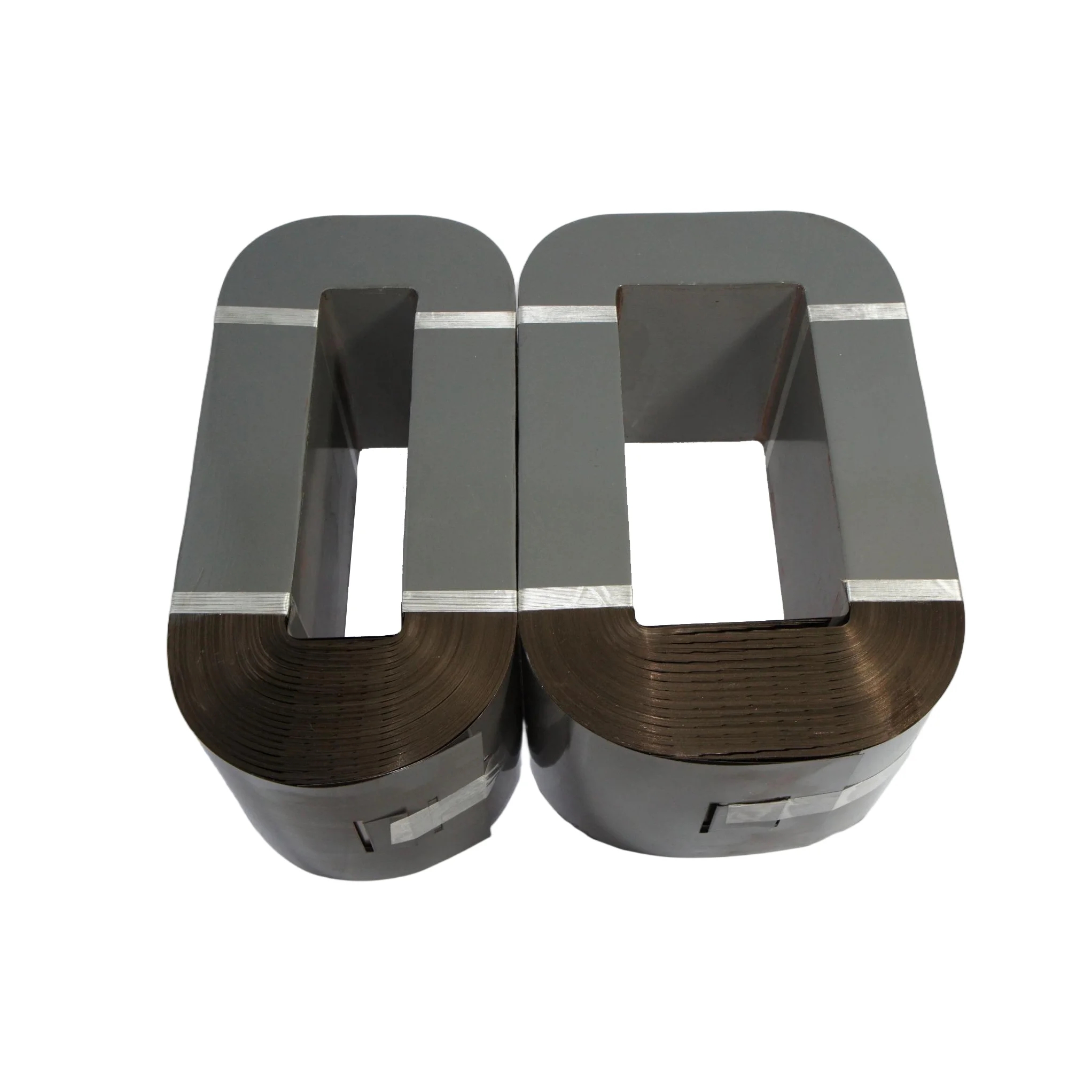
Amorphous Core Technology in Modern Transformers
Conventional transformer cores are typically manufactured using grain-oriented silicon steel. While this material has been widely used for decades, it still suffers from inherent energy losses caused by its crystalline structure, which creates resistance during magnetic domain switching.
In contrast, amorphous metal cores are produced through ultra-rapid cooling of molten alloys, a process that prevents crystallization. The resulting material has a disordered atomic structure and a very thin, glass-like metallic form. This unique composition significantly reduces hysteresis losses, which are a major contributor to energy dissipation in transformers.
Practically, transformers equipped with amorphous cores demonstrate much lower energy consumption during no-load or standby operation compared to traditional silicon steel-based designs. This makes them especially suitable for distribution networks, where transformers remain energized continuously but often operate under low or partial load conditions.
Operational Efficiency and Energy Savings
One of the most notable advantages of amorphous core transformers is the substantial reduction in idle-state energy losses. In many electrical distribution systems, transformers run 24/7 regardless of demand fluctuations. Even when power usage is minimal, conventional units continue to consume energy.
Amorphous cores help mitigate this issue by drastically lowering core losses, resulting in improved energy efficiency over the entire lifecycle of the equipment. For utilities managing large-scale transformer networks, these savings accumulate into significant reductions in total system energy consumption.
Additionally, lower energy losses translate into reduced heat generation. This improved thermal behavior helps maintain more stable operating conditions, slows down insulation aging, and ultimately extends transformer service life while reducing maintenance requirements.
Dingmao (DM): Engineering Expertise and Manufacturing Development
Dingmao (DM) has played a notable role in advancing amorphous core applications within transformer manufacturing. Originating in Taiwan in 1970 as a family-operated business, the company has grown into an international supplier serving multiple segments of the power industry.
A key development in DM’s history was its collaboration with GE Prolec, focusing on the production and application of amorphous steel cores for distribution transformers. This partnership strengthened its technical capabilities and integrated the company more deeply into global transformer supply chains.
As global demand for energy-efficient solutions increased, DM expanded its manufacturing base into China, introducing advanced production systems and transferring mature technologies from its Taiwan operations. This allowed the company to scale production while maintaining consistent quality control and engineering precision.
Today, DM offers a comprehensive portfolio of transformer components and complete systems, with amorphous core technology serving as a central element in its high-efficiency product strategy.
More information about their solutions can be found here:
<a href="https://www.dmtransformer.com/amorphous-cores-for-oil-induced-transformers.html">amorphous cores for oil-induced transformers</a>
Precision Manufacturing and Process Control
The production of amorphous cores requires far more than simply selecting suitable raw materials. It demands extremely precise control over cooling rates, ribbon thickness, and winding techniques. Even minor inconsistencies can negatively impact magnetic performance and structural stability.
DM applies strict process management throughout the entire production cycle, from raw material sourcing to final core assembly. Each stage is carefully controlled to ensure uniform magnetic characteristics and minimal energy loss performance.
Over time, the company has also refined its lamination and assembly technologies, improving structural accuracy and reducing vibration and noise during transformer operation. These enhancements contribute to higher efficiency and better real-world performance in grid applications.
Application in Oil-Immersed Transformer Systems
Amorphous core technology is particularly effective when used in oil-immersed transformer designs. In these systems, the core and windings are submerged in insulating oil, which helps dissipate heat and maintain electrical insulation.
When combined with amorphous materials, oil-immersed transformers achieve even higher efficiency levels. Reduced core losses lead to lower thermal stress on the insulating oil, helping preserve its chemical stability and extend its operational lifespan.
DM has focused on optimizing this integration by refining core structures and transformer geometries to better match the characteristics of amorphous materials. The result is a more balanced system that improves efficiency, durability, and long-term operational stability.
Environmental Benefits and System-Level Advantages
Beyond technical performance, amorphous core transformers offer significant environmental benefits. By reducing no-load losses, they directly contribute to lower carbon emissions associated with electricity generation.
At the scale of utility networks, even small efficiency gains per transformer can result in substantial overall reductions in energy waste. This makes amorphous core technology an important component in global efforts toward decarbonization and sustainable energy infrastructure.
DM’s continued investment in advanced materials and manufacturing processes reflects this global transition toward low-loss, high-efficiency electrical systems.
Industry Trends and Market Expansion
The adoption of amorphous core transformers is accelerating worldwide, particularly in regions where energy efficiency regulations are becoming more stringent. Governments and utility providers increasingly recognize that long-term operational savings outweigh the higher initial manufacturing complexity.
As a result, demand for advanced transformer core solutions continues to grow across both developed and emerging markets. Companies with strong technical expertise and established production capabilities, such as DM, are well positioned to support this expanding demand.
At the same time, the industry is moving toward more integrated solutions that combine amorphous core technology with digital monitoring systems, advanced insulation materials, and optimized winding designs. These developments are shaping the future of smart and energy-efficient power distribution networks.
Conclusion
Amorphous core technology represents a major step forward in transformer engineering, offering significant reductions in core losses, improved energy efficiency, and enhanced long-term reliability. Its adoption supports both economic benefits and global sustainability objectives.
With decades of manufacturing experience and early involvement in amorphous steel core development, Dingmao (DM) has contributed meaningfully to the commercialization and advancement of this technology. Through continuous innovation and process optimization, the company remains actively engaged in supporting the evolution of more efficient and sustainable power systems.
As electrical infrastructure continues to modernize, amorphous core transformers are expected to play an increasingly important role in achieving higher efficiency standards and enabling a more sustainable energy future.
http://www.dmtransformer.com
Dingmao (DM) -
AuthorPosts

- You must be logged in to reply to this topic.