- This topic is empty.
-
AuthorPosts
-
2026-02-25 at 2:19 pm #87796
In today’s fast-evolving communication landscape, organizations require reliable, flexible, and secure wireless systems that can operate in dynamic and challenging environments. Traditional communication networks—whether cellular, point-to-point radio, or satellite-based—often struggle with coverage limitations, single points of failure, or high infrastructure costs. This is where IP Mesh Radio technology comes into play.
But what exactly is IP Mesh Radio, and how does it work? Why is it becoming increasingly popular in mission-critical industries such as public safety, military operations, mining, oil and gas, border security, and emergency response?
This comprehensive guide explores the fundamentals of IP Mesh Radio, its core architecture, working principles, benefits, and real-world applications.
What Is IP Mesh Radio?
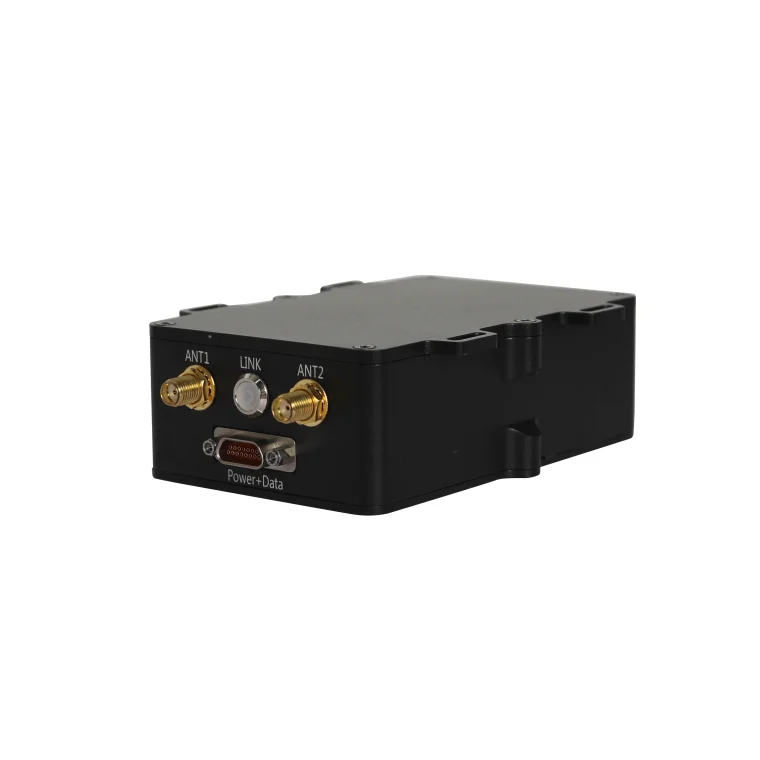
IP Mesh Radio is a wireless communication system that uses Internet Protocol (IP) over a mesh network topology. In simple terms, it is a self-forming, self-healing wireless network in which each radio node can communicate with multiple other nodes, dynamically routing data through the most efficient path available.
Unlike traditional point-to-point or star-topology networks, where all communication must pass through a central hub, an IP Mesh Radio network allows each node to act as both a transmitter and a router. This creates a resilient and decentralized communication structure.
The term “IP” refers to Internet Protocol, meaning that the system supports standard IP-based data, including:
-
Voice over IP (VoIP)
-
Real-time video streaming
-
Data transmission
-
Telemetry
-
Command and control signals
This makes IP Mesh Radio ideal for modern, integrated communication environments.
Understanding Mesh Network Topology
To fully understand how IP Mesh Radio works, we must first examine the concept of a mesh network.
In a mesh network:
-
Every node connects to multiple other nodes.
-
There is no single point of failure.
-
Data can travel through multiple possible routes.
-
If one node fails, traffic is automatically rerouted.
This structure provides redundancy and reliability. In contrast, traditional communication systems often rely on:
-
A central base station (star topology)
-
Fixed routing paths
-
Infrastructure-dependent connectivity
If the central hub fails in a star network, the entire system may collapse. However, in an IP Mesh Radio network, communication continues even if several nodes are lost.
Core Components of an IP Mesh Radio System
An IP Mesh Radio network typically consists of the following components:
1. Mesh Radio Nodes
These are the individual radio units deployed in the field. Each node:
-
Transmits and receives wireless signals
-
Routes data packets
-
Operates using IP-based protocols
-
Can be mobile, vehicle-mounted, handheld, or fixed
2. Gateway Nodes
Gateways connect the mesh network to external systems, such as:
-
The internet
-
Command centers
-
Satellite links
-
Fiber backhaul networks
3. Command and Control Software
Management software provides:
-
Network monitoring
-
Node configuration
-
Traffic management
-
Encryption and security settings
-
Performance diagnostics
4. Antennas and RF Modules
Depending on the operational environment, IP Mesh Radio systems may use:
-
Omnidirectional antennas
-
Directional antennas
-
MIMO (Multiple Input Multiple Output) technology
-
Multiple frequency bands
How Does IP Mesh Radio Work?
Now let’s explore the step-by-step process of how IP Mesh Radio operates.
Step 1: Network Formation (Self-Forming)
When IP Mesh Radio nodes are powered on, they automatically begin searching for other nearby mesh nodes. Once detected, they establish secure links.
The network forms dynamically without manual configuration. This is known as a self-forming network.
Step 2: Dynamic Routing
Each node continuously evaluates:
-
Signal strength
-
Network congestion
-
Link quality
-
Available bandwidth
Using advanced routing algorithms, the system selects the most efficient path for data transmission.
For example:
If Node A needs to send data to Node D, the system might route the data:A → B → D
Or
A → C → DWhichever path offers better performance at that moment.
Step 3: Self-Healing Mechanism
If one node becomes unavailable due to:
-
Power loss
-
Physical damage
-
Signal obstruction
-
Environmental interference
The network automatically recalculates and reroutes traffic through alternative nodes. This ensures uninterrupted communication.
Step 4: IP-Based Data Transmission
Because IP Mesh Radio operates using Internet Protocol, it supports:
-
TCP/IP
-
UDP
-
RTP for video streaming
-
VPN and encryption protocols
This allows seamless integration with:
-
Surveillance systems
-
IP cameras
-
Drones
-
Sensors
-
Command software platforms
Key Technologies Behind IP Mesh Radio
Several technologies make IP Mesh Radio highly effective:
1. MIMO Technology
MIMO increases data throughput and improves signal reliability by using multiple transmitting and receiving antennas.
2. OFDM Modulation
Orthogonal Frequency Division Multiplexing enhances spectral efficiency and resistance to interference.
3. Adaptive Coding and Modulation
The system automatically adjusts modulation schemes depending on link conditions, optimizing performance.
4. AES Encryption
Advanced Encryption Standard (AES-128 or AES-256) ensures secure communications.
Advantages of IP Mesh Radio
IP Mesh Radio provides several critical benefits over conventional communication systems.
1. No Single Point of Failure
Because the network is decentralized, failure of one node does not disrupt the entire system.
2. Rapid Deployment
IP Mesh Radio can be deployed without extensive infrastructure. It is ideal for:
-
Disaster recovery
-
Temporary events
-
Tactical operations
-
Remote projects
3. Scalability
Nodes can be added or removed without redesigning the network.
4. High Reliability
The self-healing nature ensures continuous connectivity.
5. Multi-Service Support
Supports voice, video, and data on a unified platform.
6. Mobility Support
Nodes can be mounted on:
-
Vehicles
-
Drones
-
Ships
-
Personnel equipment
The network dynamically adjusts as nodes move.
Applications of IP Mesh Radio
IP Mesh Radio is widely used in mission-critical industries.
Public Safety
Police, fire departments, and emergency responders rely on IP Mesh Radio for:
-
Live video streaming
-
Body-worn cameras
-
Command coordination
-
Real-time data sharing
Military and Defense
Tactical communication in battlefield scenarios requires:
-
Secure encrypted transmission
-
Rapid deployment
-
Anti-jamming capabilities
-
Mobile connectivity
IP Mesh Radio meets these demands effectively.
Oil and Gas
In remote drilling sites:
-
Infrastructure may not exist.
-
Cellular coverage may be unavailable.
IP Mesh Radio provides stable communication for monitoring and operations.
Mining
Underground and open-pit mining operations use IP Mesh Radio for:
-
Worker tracking
-
Equipment monitoring
-
Emergency communication
Border Surveillance
Governments deploy IP Mesh Radio for:
-
Real-time video surveillance
-
Sensor integration
-
UAV communication
Smart Cities
IP Mesh Radio supports:
-
Traffic monitoring
-
Environmental sensors
-
Public Wi-Fi
-
Security systems
IP Mesh Radio vs Traditional Communication Systems
Feature IP Mesh Radio Traditional Radio Topology Mesh Star or Point-to-Point Failure Impact Minimal High Scalability Easy Limited Infrastructure Required Minimal Often Extensive Data Support Full IP Limited IP Mesh Radio clearly provides superior flexibility and resilience.
Frequency Bands Used in IP Mesh Radio
IP Mesh Radio systems may operate in:
-
UHF
-
VHF
-
L-Band
-
S-Band
-
2.4 GHz / 5 GHz
-
Licensed or unlicensed spectrum
The choice depends on:
-
Range requirements
-
Regulatory conditions
-
Data throughput needs
-
Environmental factors
Security in IP Mesh Radio Networks
Security is critical in mission-critical operations. IP Mesh Radio systems typically include:
-
AES encryption
-
Frequency hopping
-
Authentication protocols
-
Firewall and VPN support
-
Anti-jamming technologies
These features ensure data integrity and confidentiality.
Challenges and Considerations
Although IP Mesh Radio is powerful, organizations must consider:
-
Spectrum licensing regulations
-
Interference management
-
Power consumption planning
-
Network planning and optimization
Proper design and deployment are essential to maximize performance.
The Future of IP Mesh Radio
As industries demand more robust and mobile communication systems, IP Mesh Radio technology continues to evolve with:
-
Higher bandwidth capabilities
-
5G integration
-
AI-based routing optimization
-
Improved anti-interference techniques
-
Smaller and lighter hardware designs
Its adaptability ensures it will remain a critical communication solution for years to come.
Conclusion
So, what is IP Mesh Radio and how does it work?
IP Mesh Radio is a decentralized, IP-based wireless communication system that uses mesh network topology to provide reliable, secure, and scalable connectivity. By allowing each node to act as both a transmitter and router, the network becomes self-forming and self-healing, ensuring continuous communication even in harsh or infrastructure-less environments.
Whether deployed in emergency response, military operations, mining, oil and gas, or smart city infrastructure, IP Mesh Radio offers unmatched flexibility and resilience.
As modern communication demands grow increasingly complex, IP Mesh Radio stands out as a powerful solution capable of delivering real-time voice, video, and data—anytime, anywhere.
If you're considering upgrading your communication infrastructure, understanding IP Mesh Radio is the first step toward building a more reliable and future-ready network.
http://www.suntor.com
suntor -
-
AuthorPosts

- You must be logged in to reply to this topic.