- This topic is empty.
-
AuthorPosts
-
2026-11-03 at 4:29 pm #89915
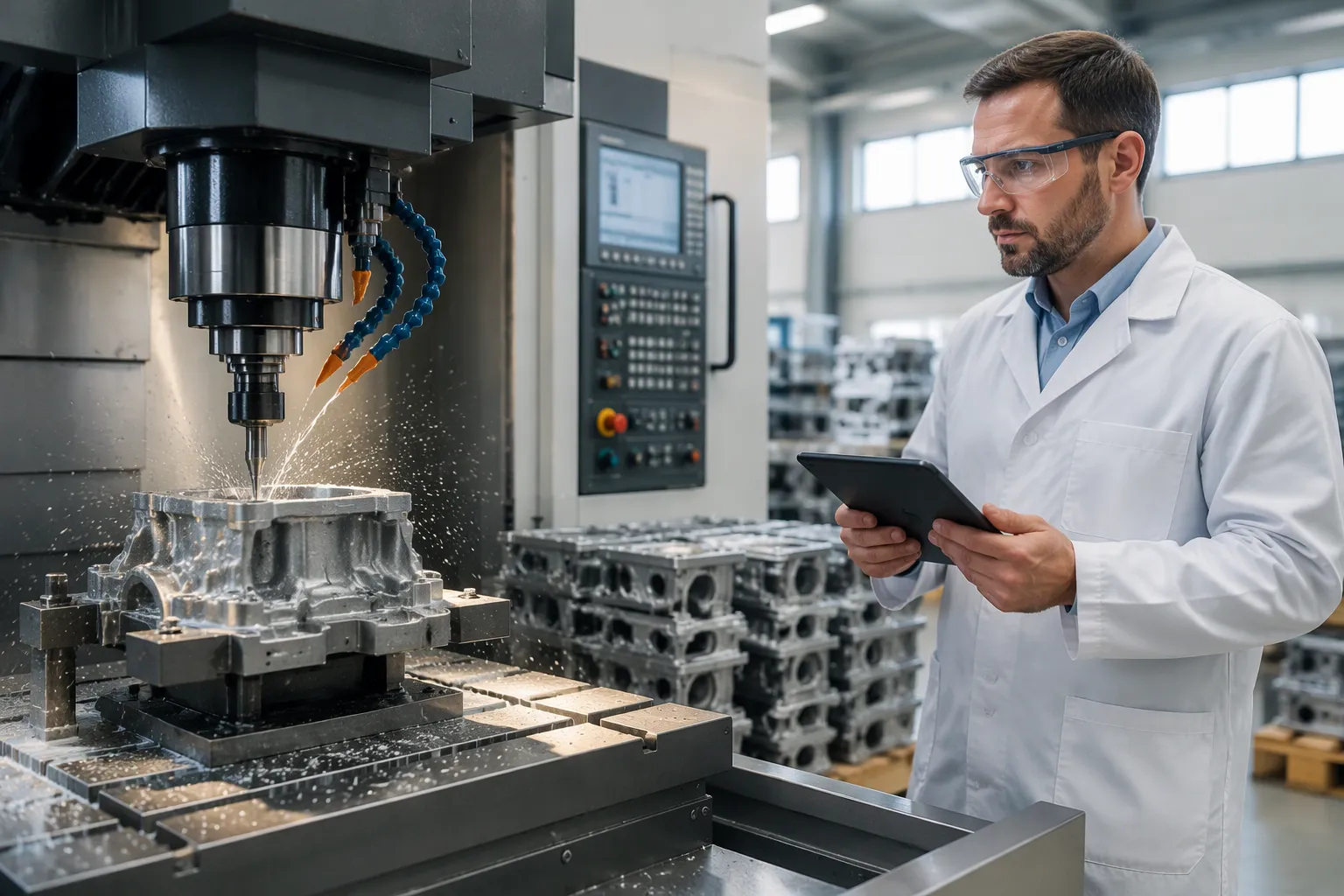
Image Source: https://www.xuxiangtaimetal.com When you need a partner who can take a part from concept to finished component without handing it off between vendors, Xuxiangtai delivers alloy casting and precision machining under one roof. That means one accountable partner from tooling and raw pour all the way to the finished, inspected part. The result is broader material and process coverage, tighter quality control, shorter lead times, and simpler procurement through a single vendor. For engineers, procurement teams, and OEM/ODM buyers, this translates into predictable performance, compliance, and cost.
Sourcing Approach Reported Cost Savings Consolidated casting + machining vs. full CNC from solid stock 30–50% lower Single RFQ to a one-stop supplier vs. separate casting and machining buys 20–30% savings Key Takeaways
- You save 30–50% on costs by combining casting and machining with one supplier instead of machining from solid stock.
- You get one team to handle your part from start to finish, which means fewer delays and better quality control.
- You receive parts that meet strict quality standards, with certifications like IATF 16949 and RoHS, and full inspection reports.
Alloy Casting Capabilities
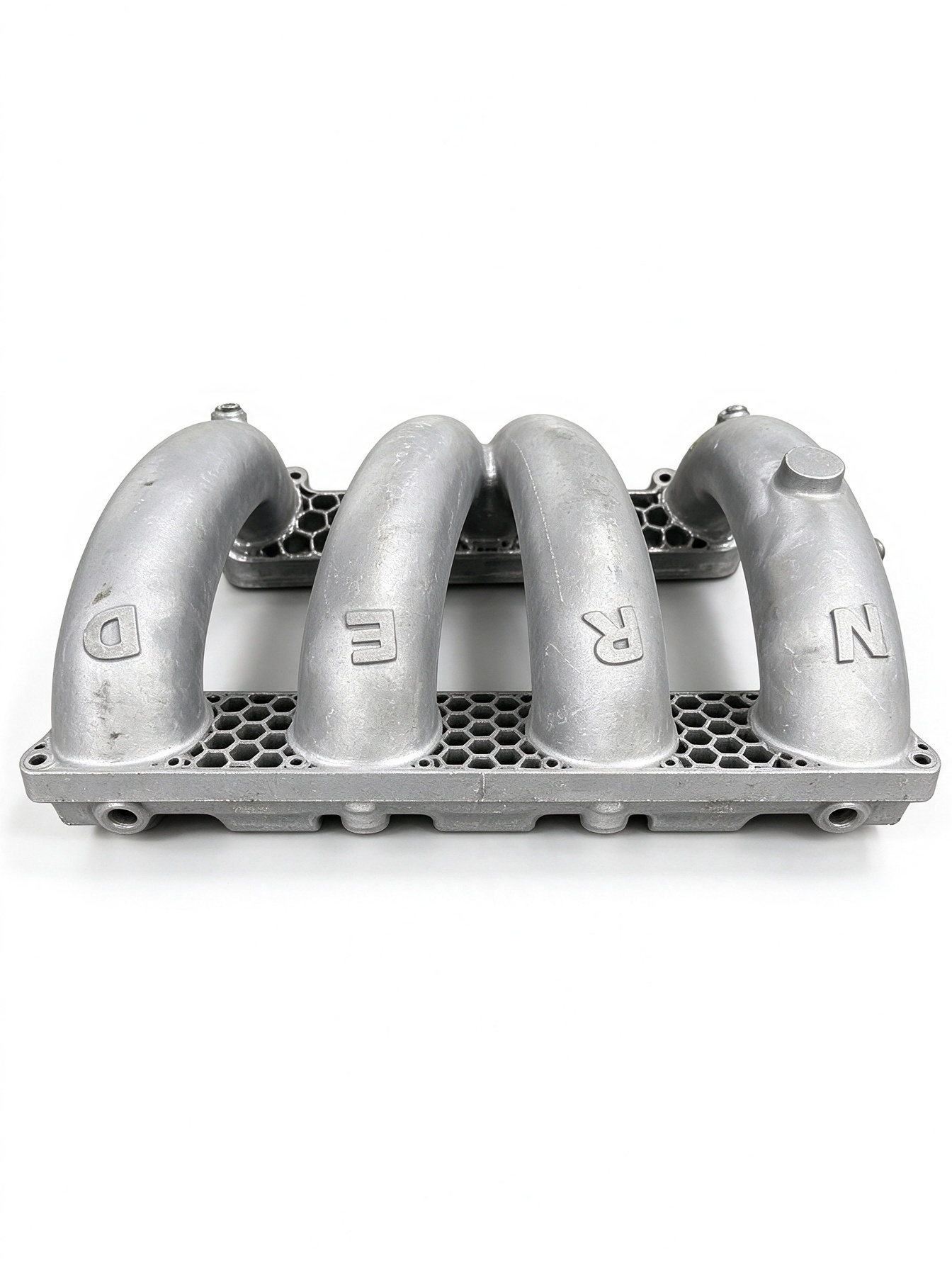
You get a wide material and process window from a single foundry partner. That range lets you match alloy performance to the real demands of your part.
Alloy Materials We Cast
You can choose from aluminum alloys such as A357-T6 for lightweight strength, stainless steel such as 17-4 PH for corrosion and wear resistance, and carbon or low-alloy steel for pressure-containing structural work. Tool steels like A2, D2, and S7 serve tool and die applications. Nickel and cobalt superalloys such as Inconel 600 series and Hastelloy X handle high-heat, high-performance duty. Strict lost-wax controls plus secondary heat treatment deliver premium mechanical properties.
Alloy Family Key Properties Typical Applications Stainless steel High strength, corrosion resistance, biocompatible Gears, turbine blades, marine and medical parts Nickel-based alloys Hot strength, toughness, corrosion resistance Jet engines, chemical processing, exhaust systems Titanium alloys Lightweight, high strength-to-weight ratio Aerospace, medical implants, marine Aluminum alloys Lightweight, durable, machinable Aircraft and vehicle components Casting Processes and Methods
You select the process that fits your geometry and volume. Investment casting delivers fine surface finish and tight tolerances. Sand casting handles large structural iron parts. Die casting shapes aluminum and zinc at high speed. Forging aligns grain flow along stress lines. Each method carries its own defect risks, from blowholes and cold shuts to shrinkage cavities. You control these through proper gating and riser design, molten metal temperature control, clean melting, and non-destructive testing.
Applications Across Industries
Your castings serve demanding sectors. Automotive programs use cast valves, brackets, and levers. Aerospace systems rely on engine and fuel system parts, hydraulic components, and landing system hardware. Medical, energy, and heavy equipment builders also depend on these alloy components.
Precision Machining Services
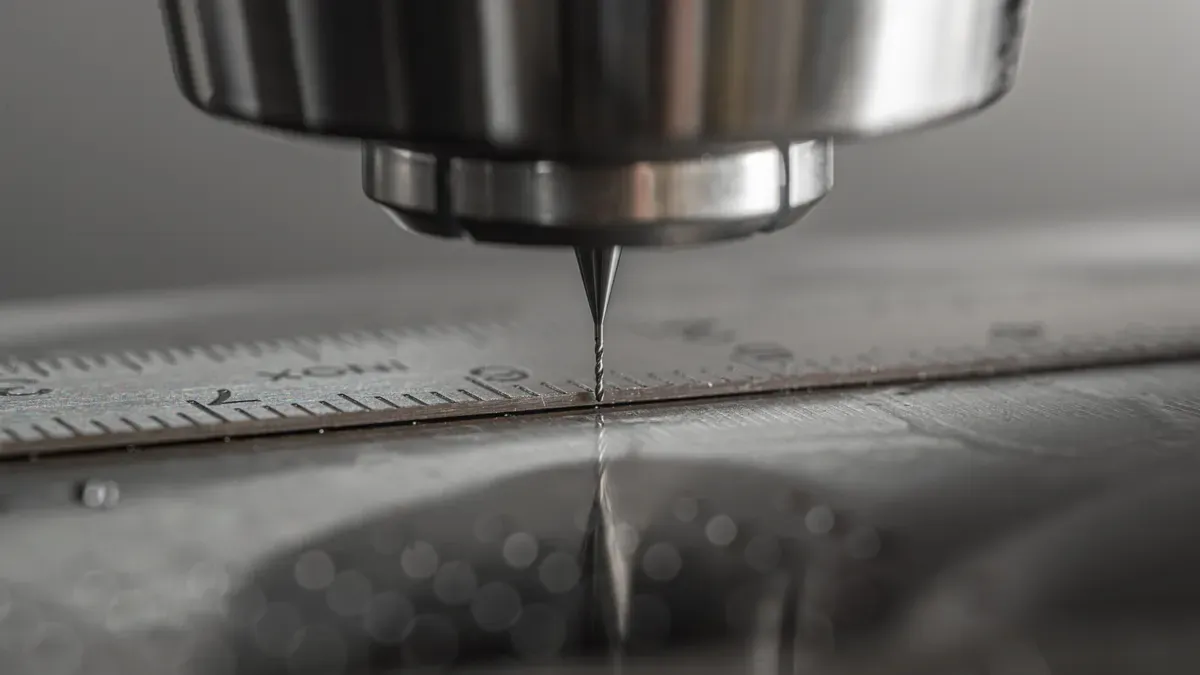
Image Source: https://www.xuxiangtaimetal.com Your casting becomes a finished, inspected part through a machining cell built for tight work. You get one team, one setup chain, and one set of inspection records.
CNC Equipment and Setup
You machine castings on 5-axis CNC milling centers, turning and composite machining stations, and EDM equipment. CAD/CAM integration drives every program from your drawing. A single setup handles complex geometry, so you avoid stacked fixturing errors. Spectral analysis confirms material integrity before the first cut.
Tolerances and Surface Finishing
You hold tolerances that match the duty of the part. Most superalloy components, including 5-axis machining of superalloy castings, land within ±0.01 mm to ±0.05 mm. Critical aerospace parts such as turbine blades, nozzle guide vanes, and sealing interfaces reach as tight as ±0.005 mm after HIP and heat treatment.
Part Category Typical Tolerance Range Most CNC-machined superalloy components (incl. 5-axis machining of superalloy castings) ±0.01 mm to ±0.05 mm Critical aerospace parts (e.g., turbine blades, nozzle guide vanes, sealing interfaces), especially after HIP and heat treatment as tight as ±0.005 mm Grinding is used after machining castings to remove minimal stock to achieve final tolerance and surface finish, and is especially critical on rotating or wear-exposed cylindrical parts where roundness and finish quality affect service life.
You then select a finish that fits the service environment.
Finishing Method Process Summary Key Benefits Typical Applications Anodizing Electrochemical conversion of the metal surface into a durable oxide layer (Type II for decorative/corrosion, hard anodizing for high performance) Corrosion resistance, increased hardness, wear resistance, decorative colors Consumer electronics, aerospace, industrial equipment (aluminum parts) Powder Coating Dry powder electrostatically applied then cured at high temperature into a solid protective layer Strong corrosion resistance, durable thick coating, uniform coverage, wide color/texture range Industrial equipment, machinery frames, outdoor components Electroplating Electric-current deposition of a thin metal layer (nickel, chrome, zinc) Corrosion resistance, electrical conductivity, bright/polished appearance Electronics, automotive components, hardware Bead Blasting High-speed impact of fine glass beads/abrasives to create a uniform matte texture Surface uniformity, removal of machining marks, attractive matte finish Aluminum housings, electronic enclosures, precision components Polishing Mechanical and/or chemical process to create extremely smooth, reflective surfaces Smooth, reflective surface General finishing From Casting to Finished Part
You plan the casting-to-machining handoff during design. A hybrid approach combines casting for low-cost basic geometry with machining for final dimensions and surface finishes. This requires careful design-phase planning to ensure adequate material allowances in areas that will be machined. The added operations increase complexity but can optimize both cost and performance.
You manage the known transition challenges with clear steps:
- Porosity: castings are inherently porous, reducing strength; billet-machined parts are denser and stronger.
- Secondary processes: porous castings must be impregnated with resin (often repeatedly) before finishing; machined hogouts need no pre-finishing.
- Finishing results: powder coating and anodizing are simpler and more even on hogouts; un-impregnated castings trap liquid that causes leaching, speckling, and poor color anodizing.
- Material options: fewer materials are available for castings (mostly aluminum, plus stainless steel, iron, bronze), while machining options are limited only by application and specifications.
- Flexible quantities: casting houses have strict minimums, whereas hogouts can be produced in low or high volumes without huge fees.
- Reduced overall cost: considering lead time, tooling, finishing, and sourcing, hogouts are often more affordable than castings.
You also resolve design conflicts early. Casting-friendly features such as draft angles and generous radii become unnecessary complexity and longer lead times when machined. Machining-friendly features such as tight tolerances and sharp corners may be impossible or economically unfeasible in casting. Your engineers should understand these trade-offs and create distinct design variants tailored to each intended manufacturing process.
The One-Stop Advantage: Integration, Quality, and Cost
Seamless Casting-to-Machining Integration
You avoid the classic split-vendor headache when one supplier pours the metal and machines the part. In a traditional setup, a foundry ships raw castings to a separate machine shop. You then coordinate between two vendors, manage quality across both, and absorb the lead time and logistics of that handoff. Xuxiangtai casts and machines components in-house, so you receive a ready-to-use part from one source. There is no inter-vendor handoff, no blame-shifting when quality problems arise, and no extra lead time from shipping raw castings out and waiting for them to return.
Integration also sharpens quality control. The machining team works with the castings daily. Process improvements on the casting side directly benefit machining, and feedback flows in both directions. This two-way loop produces better outcomes than a multi-vendor approach.
You gain concrete operational benefits from this setup:
- When casting and machining run under separate roofs, you must manage extra transportation, scheduling, inspection, and communication.
- Integrating the two operations reduces supplier handoffs and lets casting and machining requirements be considered together.
- Your engineering team can evaluate machining stock, datum locations, fixture design, tool access, dimensional relationships, and casting geometry before full production begins.
- This creates a more direct manufacturing path from cast component to finished machined part.
- Fewer suppliers means fewer purchase orders, fewer shipments, fewer production handoffs, and fewer points where communication can break down.
- A more integrated supplier relationship reduces transportation between stages, production scheduling complexity, multiple quality handoffs, separate supplier communications, administrative workload, and supply chain coordination.
Manufacturers that perform both casting and machining at one facility can be assured that casting tolerances, fixture setups, and machining processes will be aligned, resulting in improved quality and reduced lead time for finished components.
Quality Assurance and Regulatory Compliance
You get inspection records that follow the part from pour to final cut. Xuxiangtai holds IATF 16949 automotive quality management certification and RoHS environmental compliance certification. Component performance meets Class 150/300 international pressure rating standards, and parts comply with ASME B16.11 where applicable. Every order ships with 100% dimensional inspection, material validation reports, and non-destructive testing such as PT, RT, and pressure testing.
Precision machining also corrects the common quality issues that casting alone cannot solve:
Casting Quality Issue How Subsequent Precision Machining Resolves It Dimensional accuracy variability (from mold movement, inconsistent material properties, improper tooling) CNC machining after casting achieves exact final dimensions so parts meet assembly and performance requirements Rough surface finish Additional machining and finishing removes rough surfaces to improve appearance and functionality Features needing flat surfaces, precise holes, and tight tolerances These features are best achieved through CNC machining after casting Castings can be nearly complete (about 95% through post-casting precision machining) and still be scrapped due to an air pocket; surface divots may also exist that precision machining cannot fix.
RoHS compliance deserves your attention at the alloy selection stage. Not every aluminum grade passes automatically. The table below shows where common grades stand:
Alloy Grade Manufacturing Use Lead Content RoHS Compliance Notes 6061 Extrusion / CNC machining < 0.01% Yes Inherently compliant from reputable primary sources; verify anodizing is Cr(VI)-free 6063 Architectural / industrial profiles < 0.01% Yes Compliant; ensure anodized surfaces avoid hexavalent chromium 5052 Sheet metal forming < 0.01% Yes Inherently compliant; trivalent chromium or powder coating acceptable 7075 Aerospace CNC components ~0.05% Conditional Compliant only with certified primary-source lead control and Cr(VI)-free coatings 2024 Structural aerospace components ~0.02% Conditional Compliant if surface treatment avoids hexavalent chromium 2011 Free-cutting CNC alloy 0.2–0.6% (intentional Pb) No Exceeds 0.1% lead limit; not RoHS compliant — use alternatives like 6020 or 6061 6082 Heavy structural profiles < 0.01% Yes Fully compliant from controlled primary sources 3003 Heat sinks / HVAC parts < 0.01% Yes Fully compliant; standard coatings compatible A380 Die casting components ~0.05–0.15% Conditional Recycled scrap risk; requires batch testing and documented traceability ADC12 Die casting components Often > 0.1% Testing required Higher lead contamination risk from scrap; strict supplier control and certification needed Three hidden compliance risks can trip up an otherwise sound project:
- Free-cutting additives: alloys such as 2011 intentionally contain lead (and sometimes bismuth) to improve machinability, often exceeding the RoHS 0.1% lead limit. You must replace these for regulated applications.
- Recycled raw material: die-cast alloys (A380, ADC12) made from recycled or post-consumer scrap may introduce lead, cadmium, or other restricted elements. Batch testing and supplier traceability are required.
- Surface coatings: chromate conversion coatings and some electroplated layers can introduce hexavalent chromium, rendering an otherwise compliant alloy non-compliant. Control measures include switching to trivalent chromium, layer-specific XRF testing, and obtaining RoHS declarations from coating suppliers.
You can resolve the most common compliance questions before they reach your quality team:
- Are CNC machined aluminum parts automatically RoHS compliant? No — only if both the base material and surface finish are compliant. Free-cutting alloys like 2011 or non-certified coatings can violate RoHS limits.
- Do anodized aluminum parts pass RoHS? Yes, provided hexavalent chromium is avoided and trivalent chromium or compliant coating systems are used.
- Does 6061 aluminum always comply? Typically yes, but traceable material certification from reputable suppliers and compliant surface treatments are required.
- Do heat sinks require RoHS certification? Yes — they are treated as electrical and electronic components in many applications, requiring certified base alloy and compliant surface treatment.
- Can die-cast alloys like A380 and ADC12 be compliant? Conditionally — only batches with certified impurity control and testing meet RoHS standards.
Where One-Stop Sourcing Saves Money
You capture savings at several points in the chain when one supplier owns both casting and machining. Hidden costs multiply in a split supply chain. Material costs, production and processing costs, transportation and import tariffs, maintenance and repair costs, and supply chain risks all add up. Delays, longer lead times, inventory shortages, supplier responsiveness issues, and global supply chain disruptions hit harder when two vendors must coordinate.
The split-vendor model carries specific cost traps:
- Logistics and freight overhead: moving heavy raw metal castings between a foundry and a separate machine shop adds extra freight charges, packaging fees, and transit time to the production schedule.
- The blame game between suppliers: casting variations and defects (such as internal porosity or hard spots) often surface only during machining. The machine shop blames the foundry for poor blanks, and the foundry blames the machine shop for incorrect feeds, speeds, or tooling.
- Quality disputes and scrap: you are caught in the middle, absorbing delayed schedules, scrapped parts, and unresolved quality disputes.
One-stop sourcing removes these traps. You issue one purchase order instead of two. You pay one freight bill instead of two. You hold one set of inspection records instead of reconciling two. Your engineering team reviews casting and machining requirements together during DFM, so you avoid costly redesigns after tooling is cut. The consolidated approach typically delivers 30–50% lower cost than machining the same part from solid stock, and a single RFQ to a one-stop supplier saves 20–30% compared with separate casting and machining buys.
Xuxiangtai gives you one reliable source for alloy casting and precision machining, covering performance, compliance, and cost. You gain broad material and process range, 5-axis machining precision, integrated quality control backed by IATF 16949 and RoHS, and streamlined lead times. Share your project requirements today for a quote, sample evaluation, or DFM review.
FAQ
What makes Xuxiangtai a true one-stop supplier?
You get casting, machining, finishing, and inspection from one facility. One team owns your part from tooling and raw pour to the finished, inspected component. You avoid split-vendor handoffs and blame-shifting.
How tight are your machining tolerances?
You can specify ±0.01 mm to ±0.05 mm for most superalloy components. Critical aerospace parts reach ±0.005 mm after HIP and heat treatment. Grinding refines roundness and finish on rotating parts.
Which certifications back your quality claims?
Xuxiangtai holds IATF 16949 and RoHS certifications. Components meet Class 150/300 pressure ratings and ASME B16.11 where applicable. Every order includes 100% dimensional inspection, material validation, and non-destructive testing.
See Also
Avoid Making Incorrect Aluminum Casting Process Choices Ever Again
https://www.xuxiangtaimetal.com
Qingdao Xuxiangtai Machinery -
AuthorPosts


- You must be logged in to reply to this topic.