- This topic is empty.
-
AuthorPosts
-
2026-05-22 at 10:04 am #88242
As semiconductor manufacturing, nanotechnology, photonics, aerospace testing, and ultra-precision metrology continue advancing toward sub-micron and nanometer-level accuracy, vibration control is becoming a core factor that directly affects system performance. In many high-end industrial and scientific environments, even extremely small floor vibrations can cause positioning errors, imaging distortion, signal instability, or measurement deviation.
Traditional passive damping methods are no longer sufficient for many ultra-precision applications, especially when low-frequency environmental vibration becomes dominant. This is why the modern ultra low frequency vibration isolation system has become a critical component in advanced manufacturing and laboratory infrastructure.
Today’s precision systems require vibration isolation solutions capable of suppressing disturbances below 1 Hz while maintaining motion stability, structural rigidity, and dynamic response performance. For industries operating high-resolution instruments and ultra-sensitive platforms, the quality of the vibration isolation system directly influences production yield, testing accuracy, and equipment reliability.
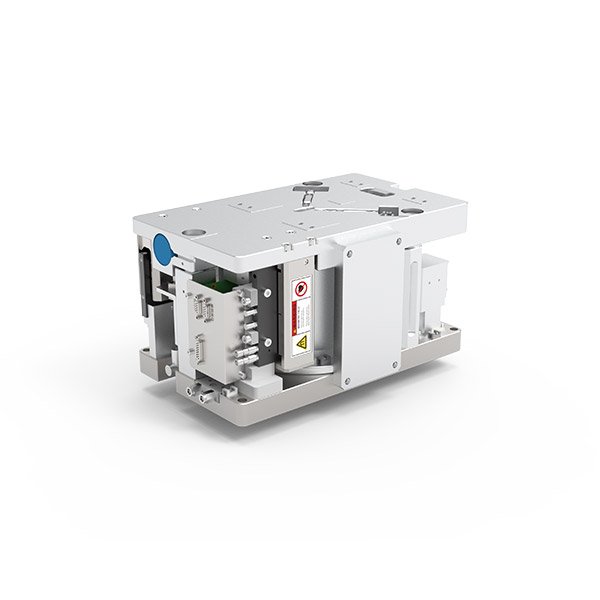
Why Low-Frequency Vibration Is Difficult to Control
In industrial environments, vibration sources are everywhere.
Common disturbances include:
-
Building structural vibration
-
HVAC systems
-
Ground traffic
-
Mechanical equipment
-
Human movement
-
Elevator operation
-
Acoustic coupling
-
Nearby manufacturing activity
Many of these disturbances occur in the low-frequency range between 0.5 Hz and 10 Hz.
Low-frequency vibration is particularly challenging because it carries large displacement energy and propagates efficiently through building structures. Even when vibration amplitude appears small, ultra-precision equipment may still experience significant performance degradation.
For example, semiconductor lithography systems, optical interferometers, electron microscopes, laser platforms, and coordinate measurement machines often require nanometer-level positional stability. A vibration disturbance of only a few microns can affect:
-
Image resolution
-
Alignment precision
-
Surface measurement accuracy
-
Exposure consistency
-
Motion synchronization
A professional ultra low frequency vibration isolation system must therefore address not only vibration amplitude, but also frequency response behavior across multiple operating conditions.
Passive Isolation Systems Have Physical Limitations
Traditional passive vibration isolation systems typically rely on:
-
Rubber dampers
-
Air springs
-
Mechanical springs
-
Pneumatic isolators
These systems can provide effective attenuation at medium and high frequencies. However, passive systems face major limitations when isolating ultra-low-frequency vibration.
The core challenge lies in natural frequency.
A passive isolation platform only begins providing meaningful attenuation when excitation frequency exceeds approximately 1.4 times the system’s natural frequency. To isolate vibration below 1 Hz, the system itself would require an extremely low natural frequency, which creates practical problems including:
-
Excessive structural displacement
-
Reduced platform stability
-
Slow dynamic response
-
Increased motion sensitivity
In ultra-precision applications, excessive platform movement may be just as harmful as external vibration itself.
This is why active isolation technology has become increasingly important in advanced precision engineering environments.
Active Isolation Technology Enables Ultra-Low-Frequency Control
Unlike passive systems, active vibration isolation platforms continuously detect and counteract vibration in real time.
A modern ultra low frequency vibration isolation system typically integrates:
-
High-sensitivity sensors
-
Servo control algorithms
-
Electromagnetic or piezoelectric actuators
-
Motion controllers
-
Real-time feedback systems
Sensors continuously monitor platform motion and environmental vibration. The controller analyzes disturbance signals and immediately commands actuators to generate compensating forces.
This closed-loop control process allows active systems to suppress low-frequency vibration that passive isolators cannot effectively manage.
Advanced active isolation systems may achieve:
-
Isolation starting below 1 Hz
-
Nanometer-level stability
-
Multi-axis vibration control
-
Fast transient response
-
Automatic leveling capability
For high-end optical and semiconductor applications, these capabilities directly affect equipment throughput and process stability.
Multi-Axis Isolation Is Essential for Precision Equipment
Many industrial users initially focus only on vertical vibration. In practice, horizontal and rotational disturbances are equally important.
Precision instruments often experience coupled vibration across:
-
X-axis
-
Y-axis
-
Z-axis
-
Pitch
-
Roll
-
Yaw
If isolation performance is insufficient in even one axis, overall system accuracy may still deteriorate.
A professional ultra low frequency vibration isolation system must therefore provide coordinated multi-degree-of-freedom control.
This becomes especially critical for:
-
Semiconductor wafer stages
-
Precision optical benches
-
Electron microscopy systems
-
Aerospace testing equipment
-
High-resolution metrology platforms
Integrated six-degree-of-freedom control improves:
-
Positioning accuracy
-
Imaging stability
-
Motion repeatability
-
Dynamic synchronization
Modern active isolation platforms increasingly combine structural rigidity with multi-axis control algorithms to achieve both vibration suppression and motion stability simultaneously.
Dynamic Response Performance Matters in Real Operating Conditions
Some isolation systems perform well under stable laboratory conditions but struggle in dynamic industrial environments.
Real-world facilities frequently experience:
-
Sudden mechanical shocks
-
Equipment startup vibration
-
Operator movement
-
Variable load conditions
-
Structural resonance changes
A high-performance ultra low frequency vibration isolation system must therefore maintain stable isolation performance under changing environmental conditions.
Dynamic response capability depends heavily on:
-
Sensor sensitivity
-
Controller bandwidth
-
Actuator response speed
-
Structural design
-
Feedback algorithm optimization
Slow-response systems may allow transient vibration to reach sensitive equipment before compensation occurs.
In semiconductor and photonics manufacturing, transient vibration events may directly affect process yield and equipment calibration stability.
Structural Rigidity and Isolation Must Be Balanced
One common misconception is that softer isolation systems always provide better vibration attenuation.
In reality, excessive structural flexibility may introduce:
-
Platform drift
-
Motion instability
-
Resonance amplification
-
Reduced positioning accuracy
Ultra-precision applications require both:
-
Effective vibration isolation
-
High structural stiffness
Achieving this balance is one of the most difficult engineering challenges in active isolation system design.
Modern systems often use optimized mechanical structures combined with intelligent control algorithms to maintain platform rigidity while suppressing environmental vibration.
This is particularly important for:
-
Large optical platforms
-
Heavy semiconductor tools
-
Multi-component integrated systems
A professional ultra low frequency vibration isolation system manufacturer must therefore possess expertise not only in control systems, but also in structural mechanics and mechatronics integration.
Environmental Adaptability Influences Long-Term Stability
Industrial environments vary significantly in:
-
Floor stiffness
-
Temperature fluctuation
-
Humidity
-
Electromagnetic interference
-
Equipment load distribution
These environmental factors can influence isolation system performance over time.
For example, thermal drift may affect sensor accuracy, while uneven load distribution can reduce platform stability.
Advanced active isolation systems increasingly incorporate:
-
Automatic calibration
-
Real-time load compensation
-
Adaptive control algorithms
-
Environmental monitoring
These technologies improve long-term operational stability while reducing manual adjustment requirements.
Wuhan Glory Road Precision Technology Co., Ltd., as a manufacturer specializing in active vibration isolation equipment, motion controllers, and integrated mechatronic systems, focuses on providing precision isolation solutions designed for demanding industrial and scientific applications.
Integrated mechatronic engineering capability becomes especially important when supporting complex precision platforms requiring both motion control and ultra-low-frequency vibration suppression.
Isolation Performance Directly Affects Production Yield
In ultra-precision manufacturing, vibration is not merely a comfort issue. It directly impacts production economics.
Poor vibration control may lead to:
-
Reduced imaging resolution
-
Positioning deviation
-
Measurement inconsistency
-
Process instability
-
Increased defect rates
-
Equipment recalibration downtime
As semiconductor processes continue shrinking and precision manufacturing tolerances become tighter, vibration isolation increasingly influences:
-
Production throughput
-
Product yield
-
Equipment utilization
-
Long-term maintenance cost
For many advanced facilities, investing in a high-performance ultra low frequency vibration isolation system becomes a fundamental requirement rather than an optional upgrade.
Future Isolation Systems Will Become More Intelligent
The next generation of vibration isolation technology is moving toward:
-
AI-assisted control algorithms
-
Adaptive real-time optimization
-
Predictive vibration compensation
-
Integrated digital monitoring
-
Remote diagnostics capability
Future systems will not only isolate vibration, but also actively analyze environmental dynamics and optimize performance automatically.
As precision manufacturing, quantum technology, aerospace testing, and nanotechnology continue evolving, demand for ultra-low-frequency vibration control will continue increasing worldwide.
Manufacturers capable of combining active control technology, precision mechanics, sensor integration, and intelligent motion systems will remain highly competitive in the global precision engineering market.
Conclusion
Modern precision industries increasingly require vibration isolation solutions capable of controlling disturbances far below the capability range of traditional passive systems.
A professional ultra low frequency vibration isolation system must combine active control technology, multi-axis motion compensation, structural rigidity optimization, and intelligent real-time feedback to support ultra-sensitive equipment operating in demanding environments.
As industrial precision requirements continue advancing toward nanometer-level accuracy, active vibration isolation technology is becoming an essential foundation for semiconductor manufacturing, optical systems, aerospace testing, precision metrology, and advanced scientific research.
Wuhan Glory Road Precision Technology Co., Ltd. continues focusing on active vibration isolation platforms, motion controllers, and integrated mechatronic systems designed for high-precision industrial and scientific applications. Through continuous optimization of active control technology and precision engineering integration, modern vibration isolation systems can provide more stable, accurate, and reliable operating environments for next-generation precision equipment.
http://www.glroadprecision.com
Wuhan Glory Road Precision Technology Co., Ltd. -
-
AuthorPosts

- You must be logged in to reply to this topic.