- This topic is empty.
-
AuthorPosts
-
2026-02-09 at 11:25 am #87725
Truck recovery straps are essential tools for off-road enthusiasts, commercial drivers, and anyone who frequently travels through challenging terrains. They are designed to help safely extract stuck vehicles from mud, sand, snow, or other obstacles. While truck recovery straps may seem straightforward to use, improper usage can lead to accidents, vehicle damage, or even serious injuries. Understanding the common mistakes made during their use is crucial for both safety and efficiency.
In this article, we will explore the most frequent mistakes to avoid when using truck recovery straps and provide practical tips to ensure a safe recovery operation.
1. Using the Wrong Type of Recovery Strap
One of the most common mistakes is using an inappropriate recovery strap for the situation. There are several types of recovery straps, including kinetic straps, static straps, and tow straps, each designed for specific purposes:
-
Kinetic recovery straps are elastic and store energy to help pull a stuck vehicle smoothly. They are ideal for off-road recovery where a sudden jerk can assist in freeing the vehicle.
-
Static straps are non-elastic and are mainly used for towing or pulling vehicles short distances.
-
Tow straps are similar to static straps but are often lighter and designed for lighter vehicles.
Using a static strap when a kinetic strap is required, or vice versa, can reduce effectiveness and increase the risk of strap or vehicle damage. Always check the specifications and ensure the strap matches the weight and condition of the vehicle being recovered.
2. Ignoring the Weight Rating of the Strap
Every recovery strap has a Working Load Limit (WLL) and a breaking strength. Using a strap that is rated below the weight of the vehicle is extremely dangerous. A strap that breaks under tension can snap back violently, causing severe injuries or vehicle damage.
Tip: Always choose a recovery strap with a WLL at least 1.5 times the vehicle’s gross weight. For larger trucks and SUVs, heavy-duty straps with higher load ratings are recommended.
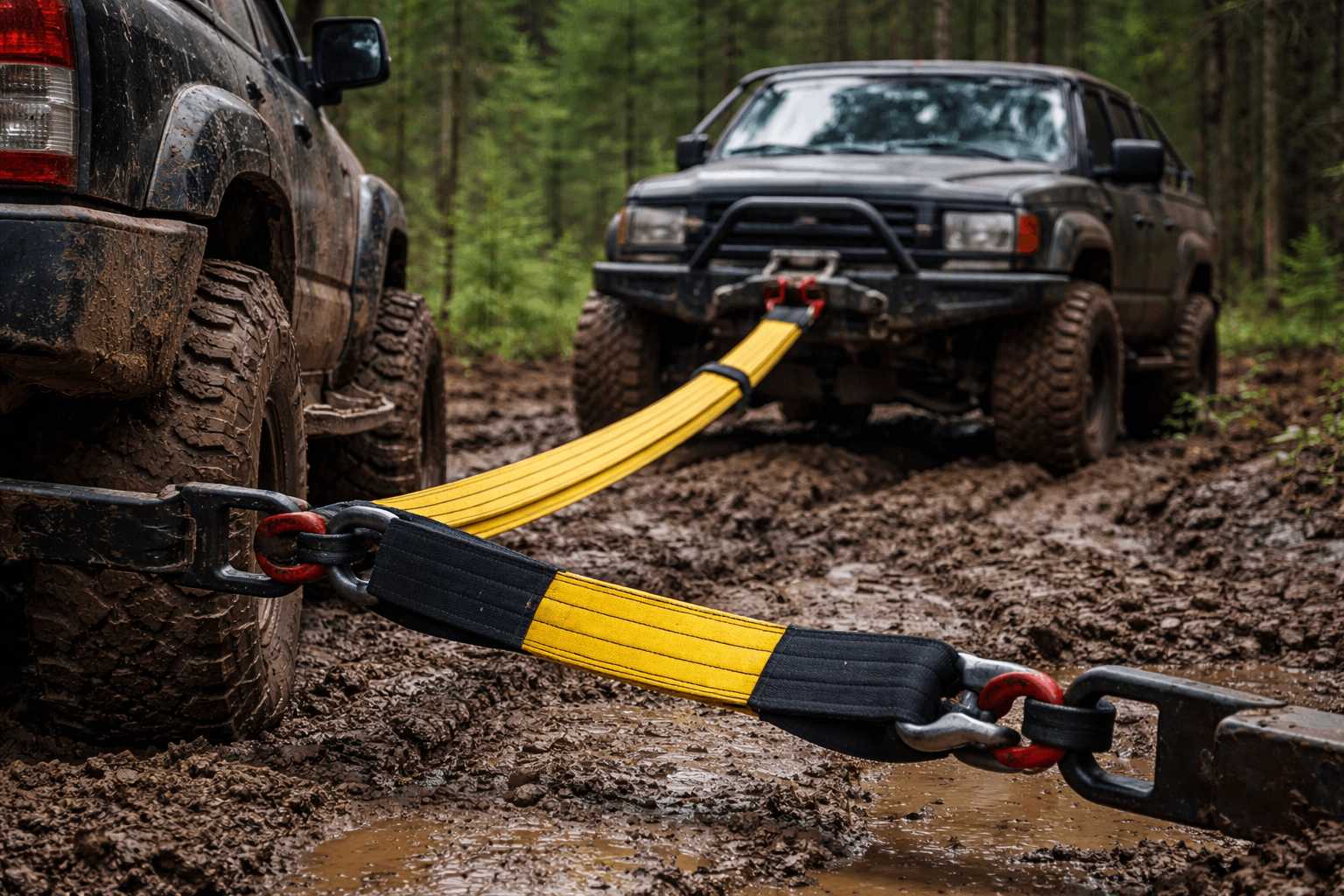
3. Improper Attachment Points
Attaching recovery straps to the wrong part of a vehicle is a serious mistake. Recovery straps should never be connected to bumpers, tow hitches not rated for recovery, or suspension components. These parts are not designed to handle the extreme stress of a stuck vehicle being pulled free.
Proper attachment points include:
-
Factory-installed tow hooks or recovery points
-
Reinforced chassis-mounted recovery eyes
-
Specialized off-road recovery mounts
Using the correct attachment point ensures the force is applied safely and reduces the risk of tearing parts off the vehicle.
4. Using Twisted or Damaged Straps
Before each use, it is essential to inspect the recovery strap for signs of wear, fraying, cuts, or kinks. A damaged strap is weaker and more likely to fail under tension. Similarly, using a twisted or knotted strap reduces its strength and can create uneven stress during recovery.
Tip: Always lay the strap flat and untangled before hooking it to the vehicles. Replace any straps showing significant wear or damage.
5. Incorrect Recovery Technique
Many beginners make the mistake of pulling a stuck vehicle too aggressively. A sudden, jerking pull can cause:
-
Vehicle damage (bumpers, axles, or frames)
-
Strap failure
-
Loss of control during recovery
Instead, the recovery should be gradual and controlled. When using a kinetic strap, allow it to stretch slightly and transfer energy smoothly. Communication between drivers is crucial to coordinate the pull and ensure safety.
6. Standing Too Close During Recovery
Safety guidelines clearly advise keeping a safe distance during vehicle recovery. People often stand too close to the strap or in the direct line of tension. If the strap snaps, it can whip back with tremendous force, potentially causing serious injuries or fatalities.
Safe practice includes:
-
Keeping bystanders at least 1.5 times the length of the strap away from the recovery line
-
Using gloves when handling straps to prevent rope burns
-
Never leaning over the strap or attaching it to yourself
7. Failing to Use a Dampening Device
A kinetic recovery strap stores a significant amount of energy during stretching. When under tension, a broken strap can release this energy violently. Many experienced off-roaders recommend using a strap dampener or a heavy blanket over the middle of the strap. This simple addition can reduce the snapback force and improve safety in case of strap failure.
8. Overlooking Environmental Conditions
Recovery operations are often performed in challenging environments, such as mud, snow, or steep inclines. Failing to consider terrain conditions can make the recovery more dangerous. For instance:
-
Mud or ice can cause vehicles to slide unpredictably
-
Rocks or tree roots can damage straps if the recovery path is not cleared
-
Steep inclines can create uneven tension and increase the risk of rollover
Tip: Plan your recovery route carefully and clear obstacles whenever possible. Always use traction aids if needed and assess vehicle stability before pulling.
9. Not Coordinating Between Drivers
In multi-vehicle recovery scenarios, lack of coordination is a frequent mistake. Both the stuck vehicle driver and the recovery vehicle driver must understand the plan, signals, and timing. Miscommunication can result in jerky pulls, excessive force, or collisions.
Practical steps for coordination:
-
Agree on visual or radio signals for start, stop, and slow pulls
-
Maintain clear communication throughout the process
-
Ensure both drivers are aware of the vehicle weight, terrain, and strap limits
10. Improper Storage and Maintenance
After use, recovery straps must be cleaned, dried, and stored properly. Mud, sand, and moisture can degrade strap fibers over time. Storing straps in direct sunlight or near sharp objects can also weaken the material.
Tip: Store straps in a cool, dry place, preferably in a protective bag. Inspect regularly for signs of wear even when not in use.
11. Using Recovery Straps for the Wrong Purpose
Recovery straps are designed specifically for vehicle recovery, not towing for long distances. Using them to tow vehicles on roads, or for purposes like hauling heavy loads, can damage the strap and void warranties. Always use proper tow equipment for on-road towing.
12. Neglecting Personal Safety Gear
Finally, one of the most overlooked mistakes is neglecting personal safety gear. Recovery operations involve high tension and unpredictable vehicle movement. Always wear:
-
Gloves to protect hands
-
Eye protection in case debris is thrown
-
Sturdy footwear to prevent slips or crush injuries
Conclusion
Truck recovery straps are indispensable tools for off-road enthusiasts and commercial drivers alike. However, improper use can lead to accidents, vehicle damage, and personal injury. By avoiding these common mistakes—such as using the wrong strap type, ignoring weight ratings, attaching to improper points, or standing too close—you can ensure a safer and more effective recovery process.
Always remember: safety, inspection, and communication are key when using recovery straps. Investing in high-quality straps, maintaining them properly, and learning correct recovery techniques can save time, money, and, most importantly, lives. Whether you are a beginner or an experienced off-roader, following these guidelines will make your recovery operations safer and more reliable.
http://www.reliablesling.com
reliablesling -
-
AuthorPosts

- You must be logged in to reply to this topic.