- This topic is empty.
-
AuthorPosts
-
2026-10-22 at 4:57 pm #89737
Pure copper wire remains one of the most trusted materials for electrical and mechanical applications because of its combination of electrical conductivity and workability. For engineers and procurement teams evaluating supply partners, understanding how grade selection, temper designation, and manufacturing process interact to determine bending and formability performance is essential before specifying material for production. This guide outlines the technical fundamentals behind pure copper wire formability, drawing on established grade standards and process controls used across the copper products industry.
Understanding Pure Copper Grades and Their Role in Formability
Pure copper, often referred to as red copper, is industrially subdivided based on oxygen content and deoxidation method into three categories: tough-pitch copper, oxygen-free copper, and phosphorus-deoxidized copper. This classification is not incidental—oxygen content directly affects welding behavior, formability, and resistance to hydrogen embrittlement, making it a central consideration during material selection.
Tough-pitch copper grades T1, T2, and T3 differ primarily in minimum copper content, which decreases sequentially: T1 requires copper content of at least 99.95%, T2 at least 99.90%, and T3 at least 99.70%. These grades are commonly used for general-purpose processed materials and electrical conductive components, including wire applications where high conductivity and consistent ductility are required.
Oxygen-free copper grades TU1 and TU2 are distinguished by high copper content paired with extremely low oxygen levels—TU1 at a minimum of 99.97% and TU2 at a minimum of 99.95%. Because oxygen content is minimized, these grades are widely applied in electronics, vacuum applications, and high-specification welded components where embrittlement risk must be tightly controlled.
Phosphorus-deoxidized copper grades TP1 and TP2 both maintain a minimum copper content of 99.90% and are deoxidized through the controlled addition of phosphorus, typically ranging from 0.004% to 0.040%. TP2 is the most commonly used grade within this category, frequently specified for water pipes, gas lines, heat exchangers, and air conditioning tubing.
For buyers working with international standards, equivalence mapping is useful: ASTM designation C11000 corresponds to electrolytic tough-pitch copper with copper content of at least 99.90%, equivalent to T2, while C12200 corresponds to phosphorus-deoxidized copper, equivalent to TP2. Recognizing these cross-references helps avoid specification errors when sourcing across different standards systems.
The Science Behind Copper Wire Bending
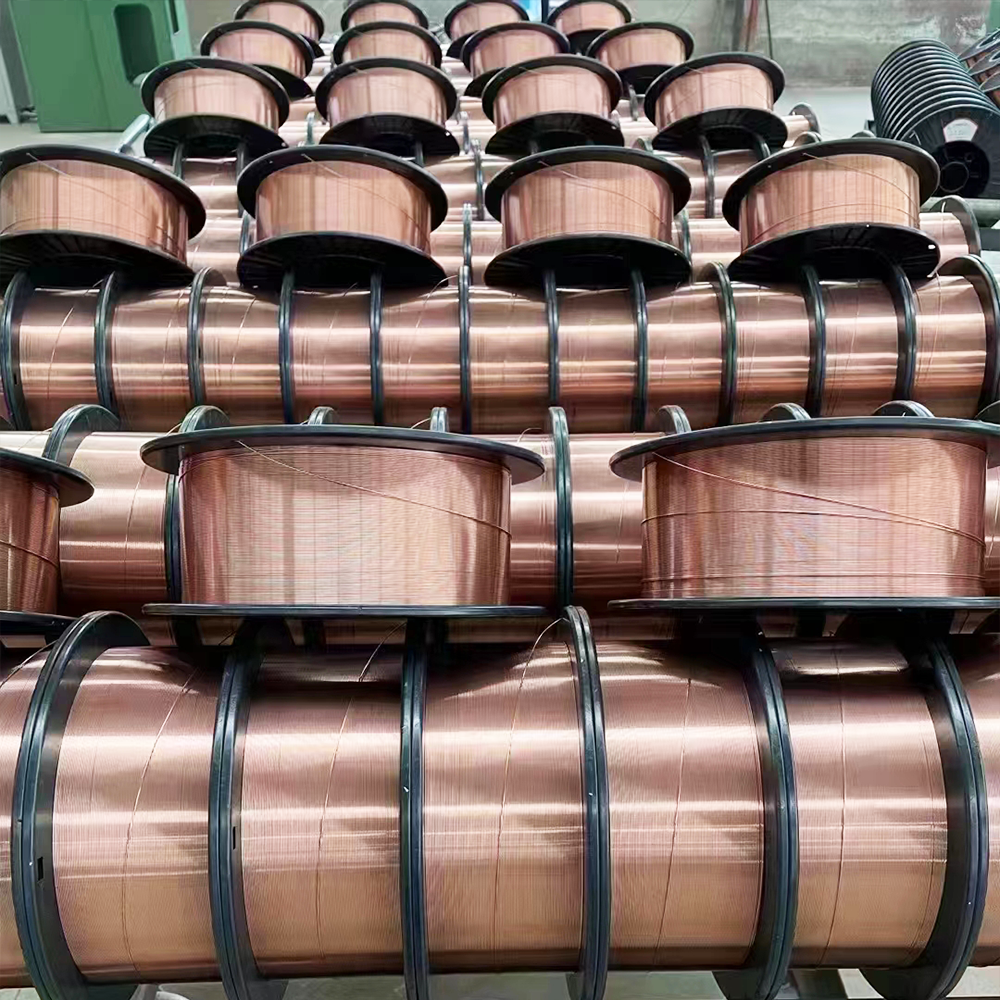
Formability in pure copper wire is governed by the balance between strength and ductility, which is established through the sequence of hot working, cold working, and heat treatment during production. Hot working—typically heating billets or ingots above the recrystallization temperature and hot rolling at approximately 800 to 950 degrees Celsius—breaks down as-cast dendritic structures, eliminates porosity, and refines grain size. This stage sets the foundation for subsequent formability.
Cold working, including wire drawing to reduce diameter and achieve dimensional accuracy, inevitably introduces work hardening. As the wire is drawn through successive passes, its strength increases while ductility decreases, which is why alternating annealing steps are necessary throughout the cold working sequence. Intermediate annealing restores plasticity between drawing passes, while final annealing—whether bright annealing or softening annealing—establishes the finished temper. Annealing parameters directly determine whether the final product is soft, half-hard, or hard, as well as the resulting grain size, both of which govern how the wire will respond to bending, flaring, or deep drawing operations.
Temper Designations and Their Impact on Bending Behavior
Temper designation is a critical specification point for any bending or forming application, since it describes the mechanical state of the copper after processing. The M designation indicates a fully annealed, soft temper characterized by high ductility and low strength, making it suitable for bending, flaring, and deep drawing operations. Common designations combining grade and temper include T2M.
The M2 designation refers to a lightly soft-annealed condition, with properties falling between soft and half-hard tempers, and is commonly referenced under relevant national standards for copper and copper alloy products.
The Y2 designation describes a half-hard temper achieved through cold working, offering a balance between strength and ductility along with good structural support—useful in applications requiring the wire to hold shape while still permitting some forming. The Y designation represents a fully hardened temper achieved through cold working, delivering high strength and rigidity but correspondingly poor formability, making it less suitable for bending-intensive applications.
For specialized applications such as air conditioning tubing, the O60 designation denotes a soft-annealed temper that is recognized internationally within the air conditioning and refrigeration sector.
Manufacturing Process Chain Supporting Wire Formability
The process route for copper wire follows multi-pass wire drawing, annealing, and subsequent stranding or braiding depending on the final product configuration. Key control points throughout this sequence include wire diameter tolerance, electrical conductivity, wire breakage rate, and flexibility—each of which has a direct bearing on how the finished wire will perform during bending or installation.
This sits within the broader production chain used across copper product manufacturing, which generally begins with copper cathode, or electrolytic copper with copper content of at least 99.95%, as raw material. Batching is performed according to grade specifications, and qualified scrap may be blended in where appropriate. The sequence proceeds through smelting and casting, hot working, cold working, heat treatment, and final inspection and packaging, with mandatory sampling and retention of test reports prior to shipment to ensure traceability.
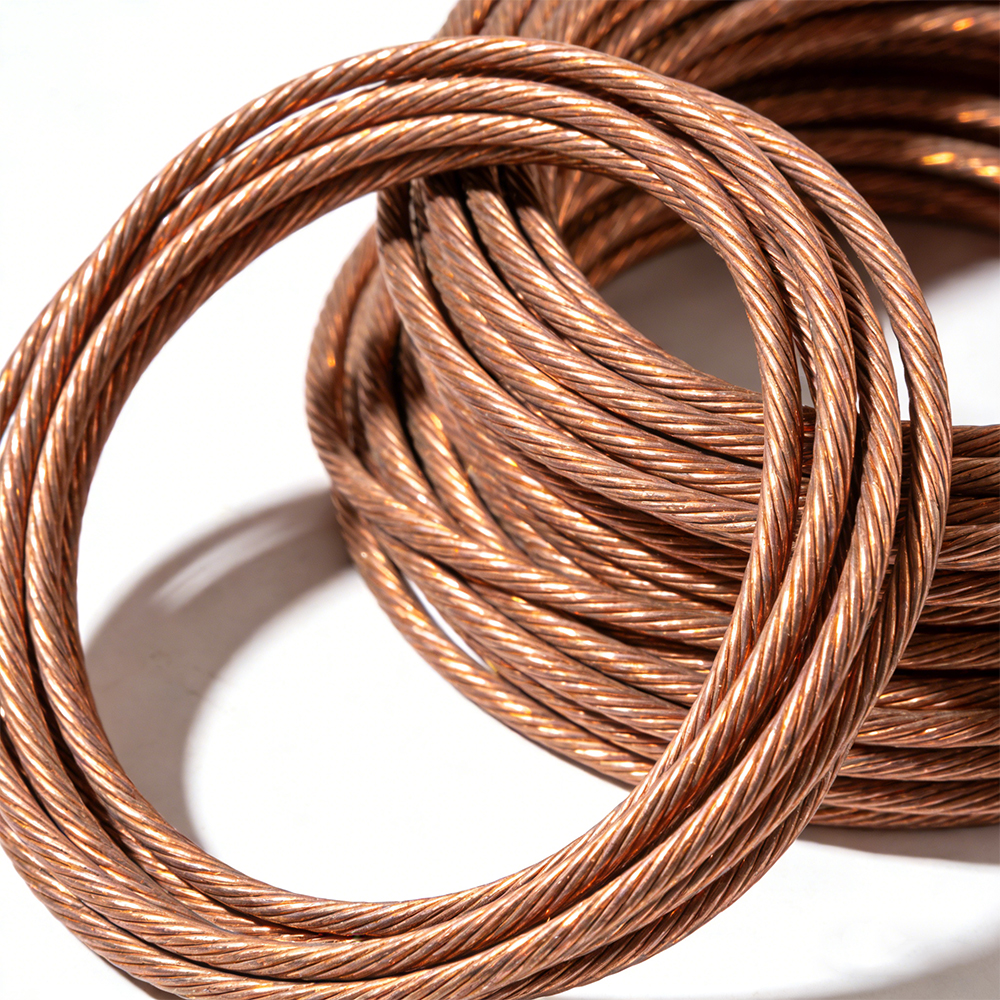
For wire products intended for braided or flexible connector applications, multiple layers of flat copper wire are stacked and then braided or extruded, followed by terminal crimping. Key control points in this configuration include braid density, contact resistance, and terminal security.
Practical Guidance for Specification and Sourcing
When requesting copper wire for bending-sensitive applications, specifying four key elements—grade, temper, cross-section, and applicable standard—helps ensure the material received matches the intended forming operation. Buyers should confirm whether a soft temper such as M or a half-hard temper such as Y2 better matches their forming requirements, since this single specification point has an outsized effect on downstream processing success or failure.
Because copper products are commonly priced on a floating model tied to benchmark copper exchange prices plus a processing fee, buyers evaluating formability requirements alongside cost should clarify pricing cycles and price-fixing methods with their supplier in advance of order confirmation.
Quality Assurance and Documentation
Reliable sourcing of pure copper wire depends on access to verifiable quality documentation. Material and quality certificates covering chemical composition, mechanical properties, and electrical conductivity provide the baseline assurance needed for formability-critical applications, and third-party or commercial inspection reports can be issued upon request for buyers requiring additional verification.
Jiangsu Xinxiangsheng Special Steel Co., Ltd., operating under the Xinxiangsheng Special Steel brand, supports this full process chain—from raw material batching according to grade specifications through smelting, hot and cold working, heat treatment, and final inspection—for pure copper wire and related copper products. By maintaining grade-specific composition control across tough-pitch, oxygen-free, and phosphorus-deoxidized copper categories, and by offering clear temper designation guidance across M, M2, Y2, Y, and O60 classifications, Jiangsu Xinxiangsheng Special Steel Co., Ltd. positions itself as a transparent reference point for buyers who need their pure copper wire specification, from grade selection through bending performance, aligned precisely to application requirements.
copper-xxs.com
Jiangsu Xinxiangsheng Special Steel Co., Ltd. -
AuthorPosts

- You must be logged in to reply to this topic.